

The fitness industry in Spain has overcome the post-pandemic reconstruction phase and has been going through something more difficult for two years: maturity. Revenue grows, chains expand more cautiously and the low-cost model accumulates millions of users. Underneath that stability is an unresolved problem: retaining the customer.
Hybrid competitions have begun to occupy that gap. The hyathlon, a combination of career and functional stations, fits into an industry that has already transformed its facilities, and that fit is not accidental.
Infrastructure is already built
For years, fitness growth in Spain was based on accumulating machines and optimizing space to maximize highs. That model has changed: today, Basic-Fit, VivaGym and Synergym dedicate a relevant part of their surface to open functional areas, designed for movement.
The change responded to the growing demand for dynamic training and group classes with a greater cardiovascular component. In that process, gyms incorporated rowing ergometers, SkiErg, thrust sleds, plyometric drawers and kettlebells: the elements that structure a hyathlon test.
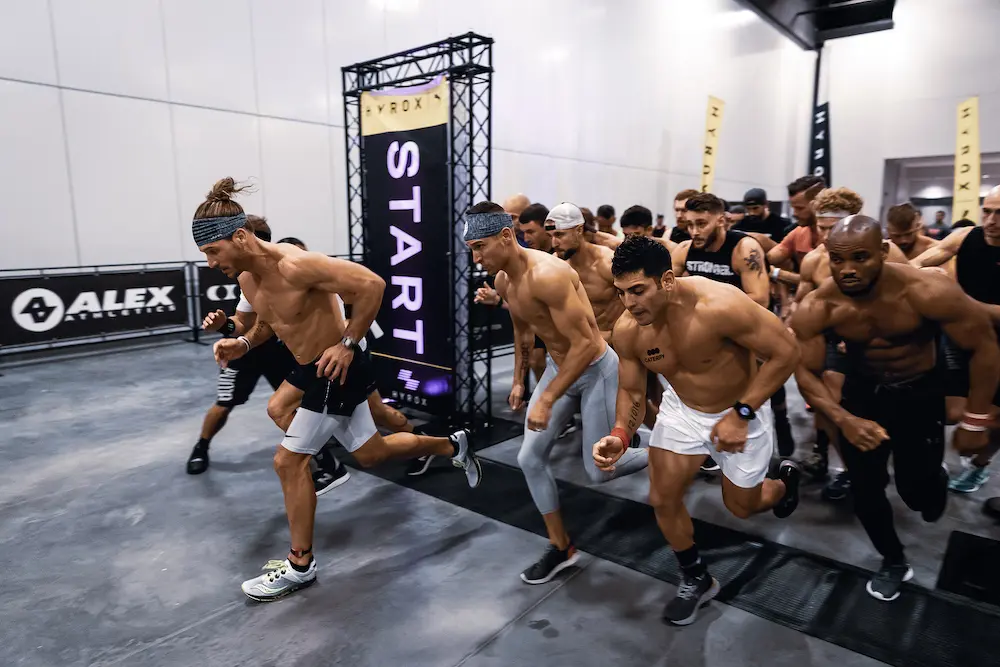
The economic outcome is clear. Hyathlon relies on already depreciated assets. Organizing an internal test does not require buying material, but rather rearranging the space and planning the circuit. The cost is in logistics, not investment.
In high-volume centres such as GO fit or Forus, where the available surface is larger, adaptation is easier. Indoor tracks, artificial turf areas and multifunctional spaces allow you to design routes without interrupting daily operations.
The same square meter generates more value without increasing spending. In a sector where other innovations involve investment and real risk, hyathlon is part of what already exists.
The real problem in the industry: retaining the customer
The dropout rate defines the fragility of the fitness model. In Spain, annual churn ranges from 30% to 40% depending on the segment. In low-cost models, that percentage may be higher in monthly terms.
A gym with a thousand members needs to attract hundreds of new customers every year to maintain its size, and attracting them is not cheap. The cost of acquiring a new user exceeds that of retaining an existing one, making loyalty the most critical variable of profitability.
The casualties do not respond to the quality of the equipment or the condition of the facilities. Users leave for a progressive loss of motivation: they stop perceiving progress or disconnect from the dynamics of the center. They are diffuse causes, difficult to combat with more machinery.
Hybrid competitions change that logic. The training has a specific objective: prepare a test, improve a time, play an internal league. When the client trains with a goal, they attend more regularly and the likelihood of dropping out is low. Not out of obligation, but because there is a purpose that justifies sustained effort.
Forus has been exploring this approach for some time now. It has developed internal competitions that group different user profiles, and the impact is not measured only in the number of participants, but in the activity they generate in the center during the weeks before and after the event.
Gamification with structure, not points
Gamification in fitness is not a new concept, but its application has been superficial. For years it was limited to rankings, points systems and occasional challenges without continuity. These mechanics do not change the user's behavior because they do not offer a real goal to guide the training.
Hyathlon works differently. The participant completes a course with clear rules, measures their performance and compares it with that of others. The user understands what they are looking for, how it is measured and how to know if it improves. You don't need anyone to explain it to you.
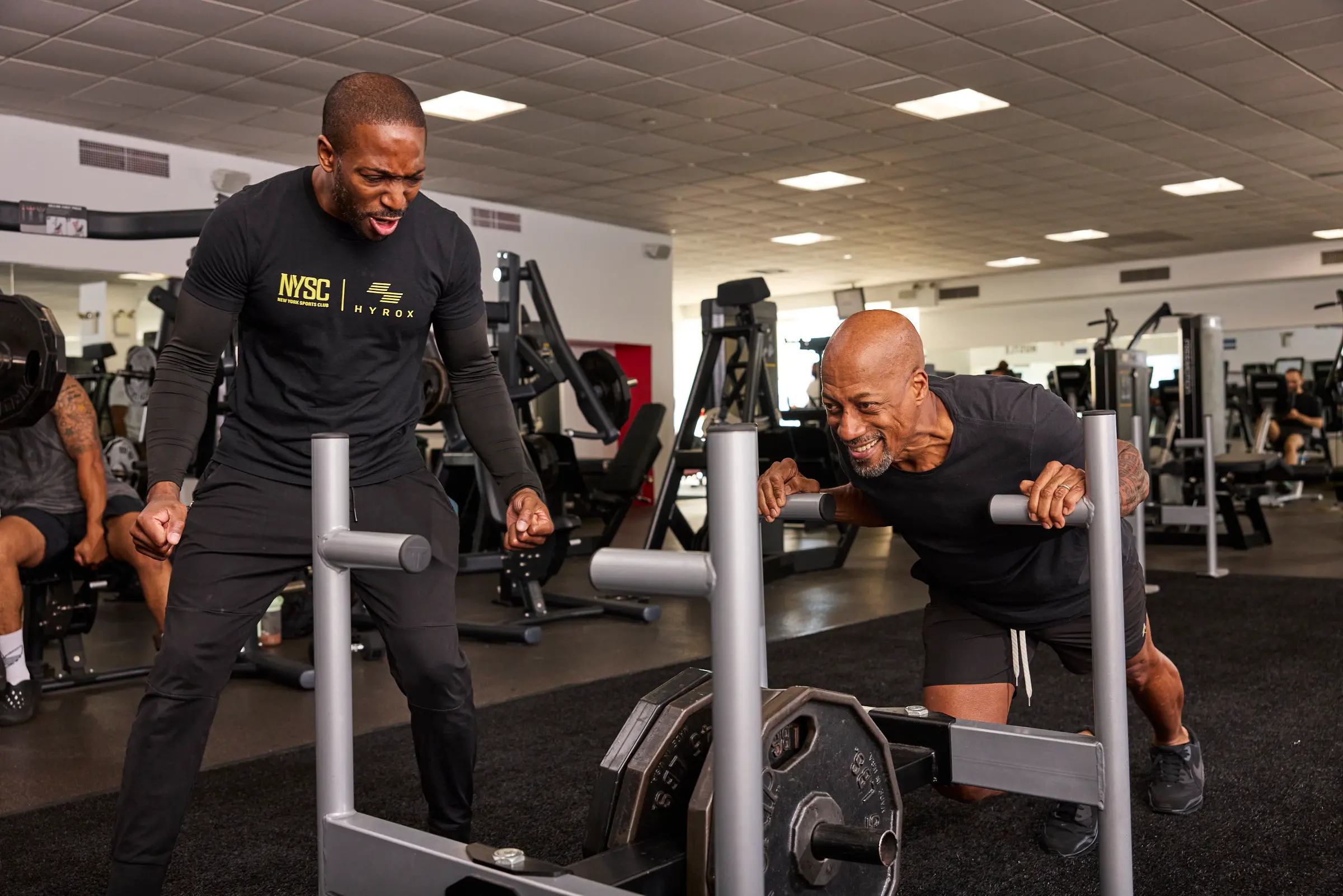
When the goal is tangible, the training is planned around it. The athlete develops a progression, works specific seasons and perceives concrete progress week by week. That's hard to achieve in the free-training model, where each session starts from scratch with no prior reference.
Chain applications such as Synergym or Basic-Fit allow you to record results and follow the evolution. They are not management tools: they are the record where the user sees their progress, and that record reinforces engagement better than any reminder notification.
The effect extends beyond the individual. Users share goals, compete in each series, and build relationships outside of class hours. Gamification generates collective dynamics that change the environment of the gym. That social component is what makes retention better, not virtual points or badges.
More revenue without raising the fee
The low-cost model has shown that the price captures customers, but with adjusted quotas, the growth margin goes through increasing the average revenue per user, the ARPU. Hybrid competitions open two ways to achieve this without touching the base price.
The first is the creation of specific preparation programs. Training for a hyathlon test requires a different approach to free training. This approach can be structured as an additional service: directed classes, personalized plans or preparation groups with a monitor, all as a layer on top of the standard fee.
The second way is the events themselves. Internal competitions, whether periodic leagues or one-off events, may include an entry. It is not a high amount, but it is a recurring source of income linked to an experience that users value and for which they prepare in advance.
The CrossFit Open has for years generated direct and indirect revenue for affiliated centers, as well as keeping users active and engaged for weeks. A similar thing happens with Hyrox: gyms function as preparation spaces and events as destinations, and that relationship feeds in both directions. Affiliated centers report higher retention in the months leading up to each competition.
For commercial chains, the appeal is that this model does not require changing the price structure or repositioning the brand. New services are added on top of what already works.
Community versus the anonymity of the macrogymnasiums
Anonymity is the central challenge of high-volume gyms. The HVLP model has democratized access to fitness, but has diluted the relationship between user and center. In these environments, the customer enters, trains and leaves without establishing any links. When the gym is not part of the user's identity, canceling the fee has no emotional cost.
Hybrid competitions generate a sense of belonging. Participating in a test or preparing an event with other users creates a shared identity: the center is no longer an exchangeable service for another of a similar price.
Studies on sports communities show a consistent pattern. Users embedded in active groups quit less often and train more. Not because they are more disciplined, but because they have a network that anchors them to space and habit. Membership in a group changes the abandonment threshold.

In practice, this leads to visible changes. Users organize, train together, and establish common routines outside of class schedules. Informal groups appear that function as support and follow-up networks. The gym ceases to be a facility to become a social environment with its own references.
For chains like VivaGym or Synergym, which manage tens of thousands of partners, these dynamics make the difference between a user who renews and one who cancels in the weak first quarter. Not in the capture, where the low-cost model already works, but in the permanence.
What has already proven to work
The hyathlon doesn't start from scratch. The growth of Hyrox and the sustained validity of the CrossFit Open offer concrete data on what happens when training and competition are combined within the same center.
In both cases, the pattern is repeated. Users who participate in these competitions train more frequently and stay longer linked to the center. In addition, they generate social activity that extends the brand's reach beyond its facilities, with an acquisition cost much lower than any advertising campaign.
For commercial gyms, the key is not to replicate those models, but to understand what makes them work: measurable goals, visible progression, community, and shared experience. The hyathlon meets all four conditions with the infrastructure that already exists.
The fitness sector in Spain has been attracting users efficiently for years. What he hasn't figured out is how to get them to stay. Hybrid competitions are not the only answer, but one that fits the existing infrastructure, the documented behavior of the most engaged users, and the need to generate additional revenue without transforming the business model.
The question for commercial chains is no longer whether hyathlon makes sense on their premises. It is how long it will take them to use it systematically before the competition does.