

Last weekend Sam Long crossed the finish line of IRONMAN Texas in 17th place, more than 23 minutes behind the winner, Kristian Blummenfelt.
The American was visibly affected after a race in which he lost any chance of victory during the cycling segment. Yesterday, on his Instagram account, he himself reflected on whether he should have given up or if crossing the finish line, despite having no chance of victory, was a good decision.
The pressure of the point system
The IRONMAN PRO Series, the goal that Sam set for this 2026, works with a classification system that forces athletes to make strategic decisions.
Each result adds or subtracts in the world ranking, and a bad day can mortgage months of work.
Trek's came to Texas with options to score valuable points, but his performance on the bike left him out of the fight for the podium before starting the marathon. “I knew I wasn't going to win. I knew I wasn't going to get on the podium. But I also knew that quitting would hurt me more than finishing,” she wrote yesterday.
The decision to continue was not sporty, but calculated: finishing in seventeenth position allowed him to score points, even if they were scarce, and avoid the zero that abandonment would have meant.
In a system where every point counts to access the great appointments of the year, retiring without injury can be interpreted as a luxury that few allow themselves. “I wasn't injured. It was wrong, but I could go on. And if you can go on, you go on,” added the one from Oro Valley. The logic of the ranking imposes a survival mentality that does not always coincide with sports common sense.
However, this pressure also has side effects: forcing the body on a day when nothing works can aggravate minor problems or generate accumulated fatigue that compromises the rest of the season.
"Finishing that race was one of the hardest things I've ever done, not because of the physical effort, but because of my head," he explained yesterday in his publication. The question is whether that mental and physical burnout outweighs the points earned. In his case, the answer seems to be yes, but it is not a universal rule.
Legacy and personal image
Beyond the points, there is another dimension to Sam Long's decision: the narrative he builds upon himself.
Long-distance triathlon lives on stories of endurance, and quitting for no apparent reason can be interpreted as weakness. “I know there are people who think I should have retired. But I'm not like that. I finish what I start,” Yo-yo says.
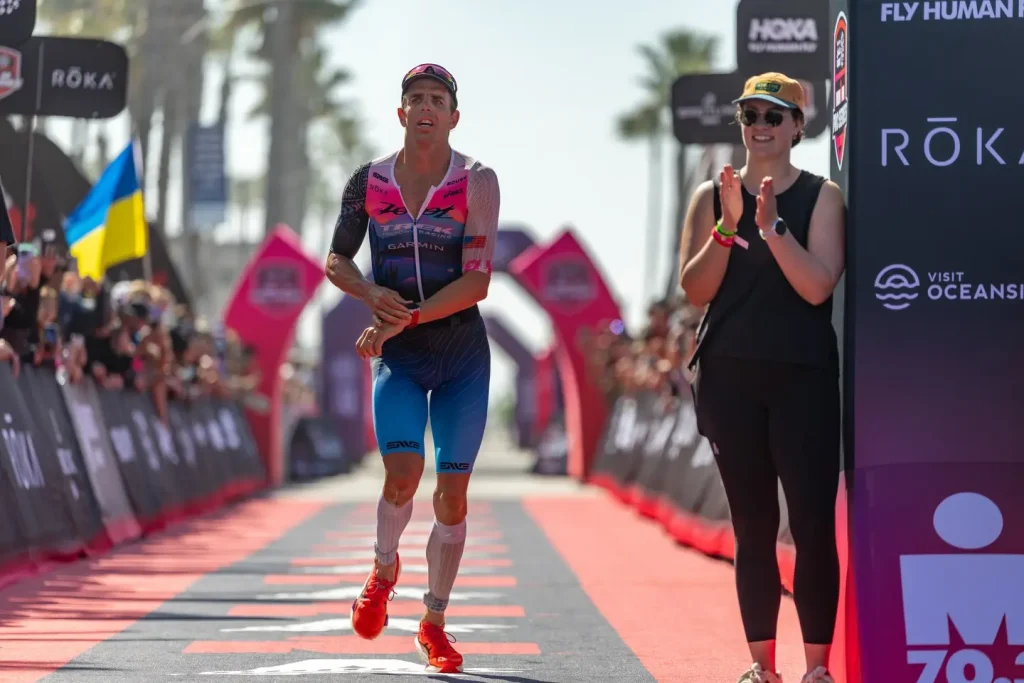
It should also be noted that Long, like Sanders, has built his image on the basis of consistency and the ability to suffer. At Oceanside, just a few weeks earlier, he had shown his best version by taking the podium and leading the race with authority.
Texas was the reverse of that coin, but also an opportunity to show another facet: that of the athlete who does not give up even if everything goes wrong. “I'd rather be remembered for ending badly than for quitting,” he declared.
However, this stance also has its critics. Some coaches and analysts find that romanticizing unnecessary suffering can backfire.
If the body is unresponsive and nothing is at stake, withdrawing may be the smartest decision.
The American, however, does not share that view. “Every race is an opportunity to learn something. And in Texas I learned that I can keep going even when everything goes wrong,” he concluded.