
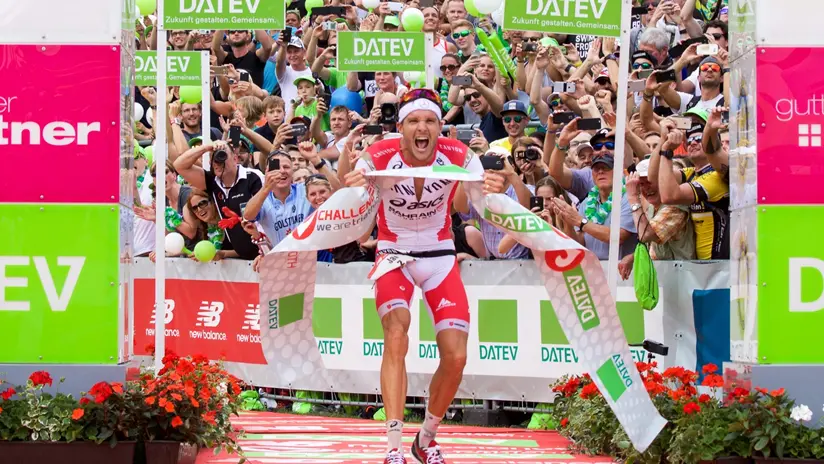
Jan Frodeno has published in his newsletter a reflection that puts into perspective the evolution of long-distance triathlon.
The German, three-time IRONMAN World Champion, has analysed the results of IRONMAN Texas 2026 and has reached a conclusive conclusion: his world record of 7:35:39, set at Challenge Roth in 2016, would not have been enough to enter the top 10 of the race held at The Woodlands. “My world record would have finished eleventh,” Jan wrote, underscoring the quantum leap the sport has experienced in less than a decade.
This year's edition of IRONMAN Texas has left data that confirms that progression: Kristian Blummenfelt crossed the finish line in 7:21:24, the second fastest time in history in an IRONMAN.
Eight national records fell in a single day: Frodeno has highlighted that ten athletes fell from 7:36:00, an unthinkable figure when he dominated the discipline. “The competitive density has completely changed,” he said.
The evolution of triathlon and new records
Frodeno has gone over the names that starred in IRONMAN Texas to illustrate the current level: everyone from Top10, up to Cameron Main, finished ahead of Frodeno's time at Roth nine years ago. “It's not just that there are a handful of fast triathletes. It's that there is an entire generation competing at a level that was exceptional before," he said.
The eight national records broken in Texas reflect that global expansion of performance: countries that traditionally were not in the top positions have placed their representatives in times that previously only reached the favorites on the podium. Frodeno has interpreted this phenomenon as a sign of the sport's maturity. “Long-distance triathlon is no longer a niche. Now it is a scenario where excellence has been democratised"
The German recalled that, when he set his record at Roth, the conditions were optimal and the route favourable. However, he has acknowledged that these factors are no longer sufficient to explain the difference. “In Texas, Blummenfelt rode at an average of over 45 km/h on the 180-kilometer bike. That's not just a good day. It's a paradigm shift.”
The importance of technology and competition
Frodeno referred to the thrilling duel between Blummenfelt and Marten Van Riel, which kept the audience on the edge of their seats. “With 16 kilometres of running remaining, Blummenfelt and Van Riel were 10 seconds apart. He won by 1:32," he said, underlining the intensity of the competition.
Frodeno highlighted the performance of other notable triathletes such as Jelle Geens, who, despite being a full distance rookie, “ran with the best athletes in the world for 30 kilometers before his body decided that the lesson would have to wait another day.”
Frodeno also reflected on the meaning of records in sport. “One way to look at records is that they don't really belong to the people whose names are attached to them. They belong to the sport," he said.
“The sport is in a remarkable place,” she concludes, “the women's category wins with times that not long ago would have been times of overall victory.”