
The ritual is known to all of us. Saturday, 7 in the morning. You dress in lycra, prepare the drums, check the pressure of the wheels and go out on the road in search of those kilometers that will bring you closer to your next goal.
But lately, the excitement is joined by a shadow of restlessness. A car that passes too close, a driver looking at his mobile phone, a shoulder that disappears without warning.
Road cycling, the pillar of our sport, has become for many a daily risk calculation exercise.
It is not an isolated perception. It is a reality that is pushing thousands of athletes to look for alternatives. And no, we're not just talking about locking yourself in the roller.
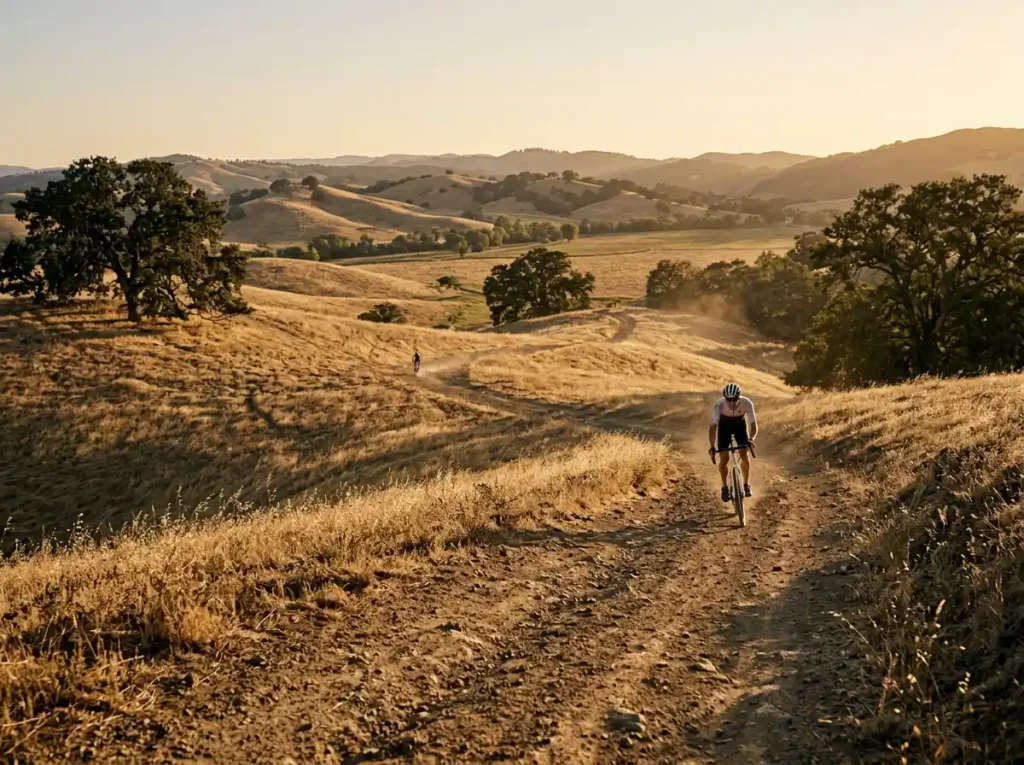
A silent revolution is underway, one that takes us back to dirt roads and away from traffic: the gravel. What began as a niche discipline is today one of the most powerful and safe training tools for the triathlete.
And we assure you that it is not a passing fad; it is a logical evolution in search of a more sustainable, safe and, surprisingly, more effective training.
Asphalt, an inevitable battlefield
Let's face it: the most stressful part of many cycling workouts is no longer the series in Z4, but the journey to get to a safe area to do them.
Increased traffic and distracted driving have made our roads an increasingly hostile environment.
The figures, although from the United States, are a reflection of a worrying global trend: the Insurance Institute for Highway Safety (IIHS) reports more than 1,100 cyclists killed and nearly 50,000 injured annually in collisions with vehicles.
This constant stress has a psychological toll that directly affects our performance. When you train in tension, your overall training load increases, recovery worsens, and consistency suffers.
Many triathletes have experienced it in their own flesh: "I was constantly on edge during weekday outings," confesses Darleen McNar, a triathlete who now performs most of her aerobic volume in gravel.
For others, like Jane Henderson, the change was eye-opening: the gravel was “the first time I felt like riding a bike was restorative again, not something I had to mentally prepare for.”
That mental shift is pure gold. Being able to focus on effort, nutrition and sensations, instead of looking in the mirror, completely transforms the quality of each outing.
Gravel: much more than an escape route
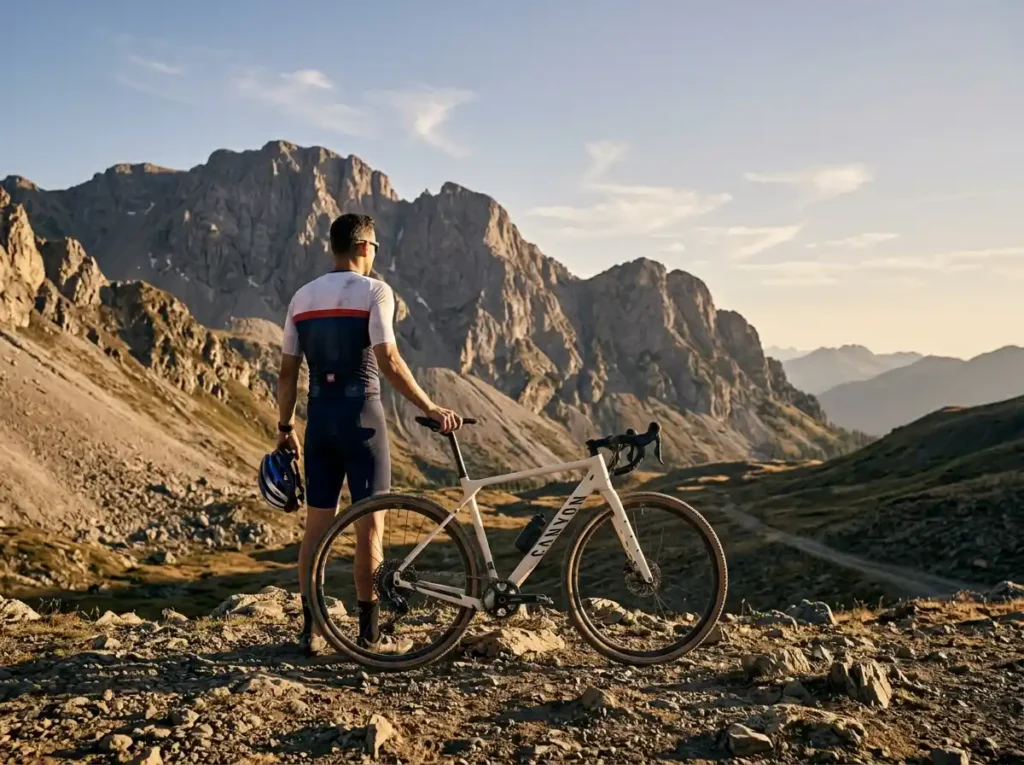
If safety is the gateway to gravel for many triathletes, performance is the reason they stick around.
Far from being a “junk workout” or a simple distraction, accumulating miles on dirt tracks has physiological benefits that transfer directly to the asphalt on race day.
Professional triathlete Eric Lagerstrom, one of the pioneers in integrating gravel into his preparation, is clear on this. “The grinding of gravel is a real thing, and it can make you incredibly strong when you get it back on the road,” he says.
That concept, grinding strength, is the key. The greater rolling resistance of the earth forces you to apply a more constant and sustained force on the pedals, developing a muscular resistance that is fundamental in medium and long distance.
The Benefits of Ground Training
From Planeta Endurance, and after analyzing the experience of coaches and athletes, we have identified four key advantages that gravel brings to your preparation as a triathlete:
- More "honest" power: In gravel, the inertia is lower. There are no breaks. Irregular surfaces force you to pedal steadily, smoothing out the power spikes and micro-breaks we often have on the road. This replicates much better the metabolic demands of a triathlon, where the goal is to maintain a stable effort for hours.
- Higher muscle demand at lower speed: Forget the obsession with average speed on Strava. In gravel you will go slower, but that is irrelevant. What matters is the time in the area and muscle tension. The dirt increases endurance without the need to go faster, an effect similar to running in the mountains to strengthen the legs without the impact of asphalt.
- Improved handling and stability: The tracks force you to be more relaxed on the bike, to anticipate the trails and to maintain your balance. All these skills translate into greater control of your "goat" in windy conditions, in technical supplies or when fatigue tightens in the final kilometers of an Ironman.
- Mental strength: A long gravel route demands patience, adaptability, and concentration. You don't have the constant feedback of speed, just your perceived effort and watts. You develop a capacity for suffering and resilience that are crucial on the day of the competition.
And what about specific training?
Gravel is an extraordinary addition, not a total substitute. Eric Lagerstrom himself qualifies its use: "We don't usually do series in gravel. But the background shoots, the outings to enjoy or the recovery days are all playing field.”
Now, let's be honest and transparent: does this mean that you should sell your road bike and train only on tracks? Definitely not.
Road training remains irreplaceable for specific competition work: series at race pace, cadence work and, above all, adaptation to aerodynamic position.
As one user on the Slowtwitch forums points out, off-road training "fails completely when it comes to training other aspects of cycling performance such as cornering, going down ports, braking or race dynamics."
Another comment points to a crucial detail: indoor training (and by extension gravel, where it is not usually coupled) "completely ignores the stabilizing muscles you use to maintain the aero position outside, especially in gusty wind conditions."
The key, as always, is in the balance: and uses the gravel to build an aerobic base and a bomb-proof force, and reserves the road for quality training and adaptation to the competition material.
How to adapt your workouts to gravel (without ruining yourself)
Integrating gravel into your planning is easier than it sounds. You don't need a radical change.
The material: don't rush to buy the latest gravel bike on the market. Many “big-bottom” or “endurance” road bikes support wider tires. With 38-45mm tires and lower pressures, you can start exploring the tracks near your home. Comfort and traction are more important than aerodynamics.
Rhythm: think about time and effort (power or perception of effort – RPE), not speed or distance. A 3-hour gravel ride can be metabolically equivalent to a 4-hour road ride.
The strategy: use gravel intelligently. Long Z2 shoots are perfect for building your aerobic base without the mental fatigue of traffic. Sustained efforts on reefs are ideal for improving strength-endurance, simulating the demand for a leg-breaking run. And the days of active recovery benefit from a smooth outing on the slopes, much more stimulating and fun than riding on the same roads
Ultimately, triathletes don't need any more talk about being brave in traffic. We need sustainable ways to train consistently, safely and with confidence. Gravel offers just that. It is not a question of renouncing asphalt, but of expanding our toolbox.
So the next time you're planning your weekend, take a look at those paths you've always ignored. You may find that the safest route to your best version is not covered in asphalt. It's not an escape, it's a competitive advantage.