
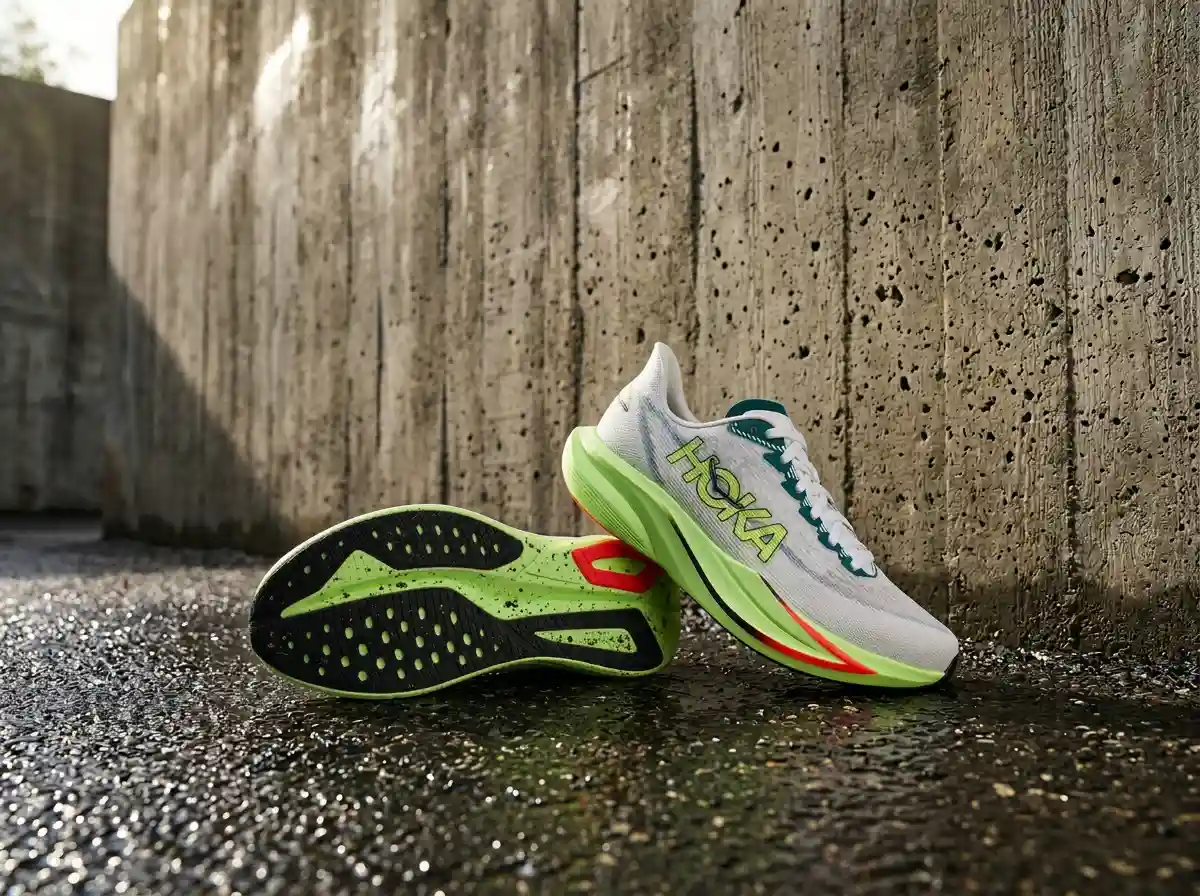
There are shoes that ask you to choose: either you train hard with them, or you wear them to ride calmly. The HOKA Mach 7 rejects that logic.
They are a shoe designed for the runner who already has rotation and looks for that piece that fills the gap between the taxi tank and the competition flyer with carbon plate. After more than 150 kilometers with them - series on the track, tempos, medium runs and some whimsy - here is the analysis without euphemisms.
First impressions: what the numbers say and what the hand says
In size 44 (10 USA), the Mach 7 weighs 235 grams. That's no small feat: we're talking about a generously cushioned shoe that weighs less than many of the competition's lightweight training options. When catching them, the first reaction is one of strangeness. How can something so big weigh so little?
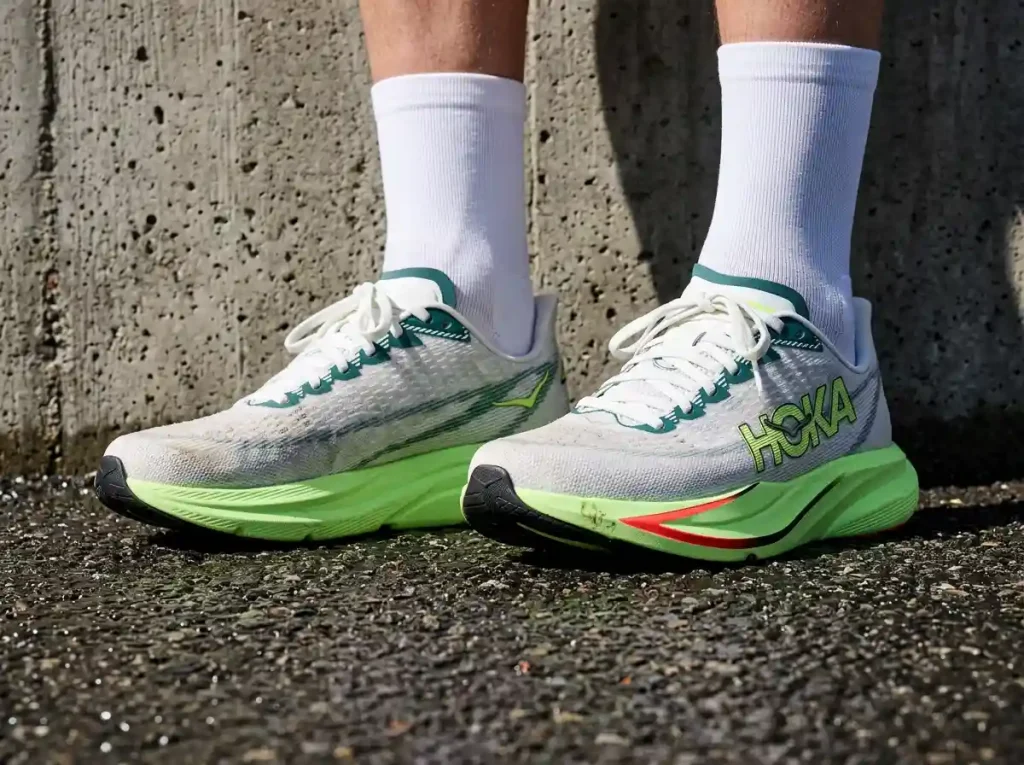
Visually compared to Mach 6, the change is not dramatic. HOKA has not broken anything, he has tuned. And here's the thing: when something works, don't destroy it, improve what has room for improvement.
The Midsole: Supercritical EVA and What That Means in Practice
The most important change of this generation is in the foam. The Mach 7 leaves the double-density configuration of previous versions and bets on a single piece of supercritical EVA.
The process involves injecting microscopic bubbles of gas (nitrogen or CO2) into the compound of the midsole. The result: a lighter, more reactive foam with greater accumulated compressive strength.
HOKA MACH 7
 Activo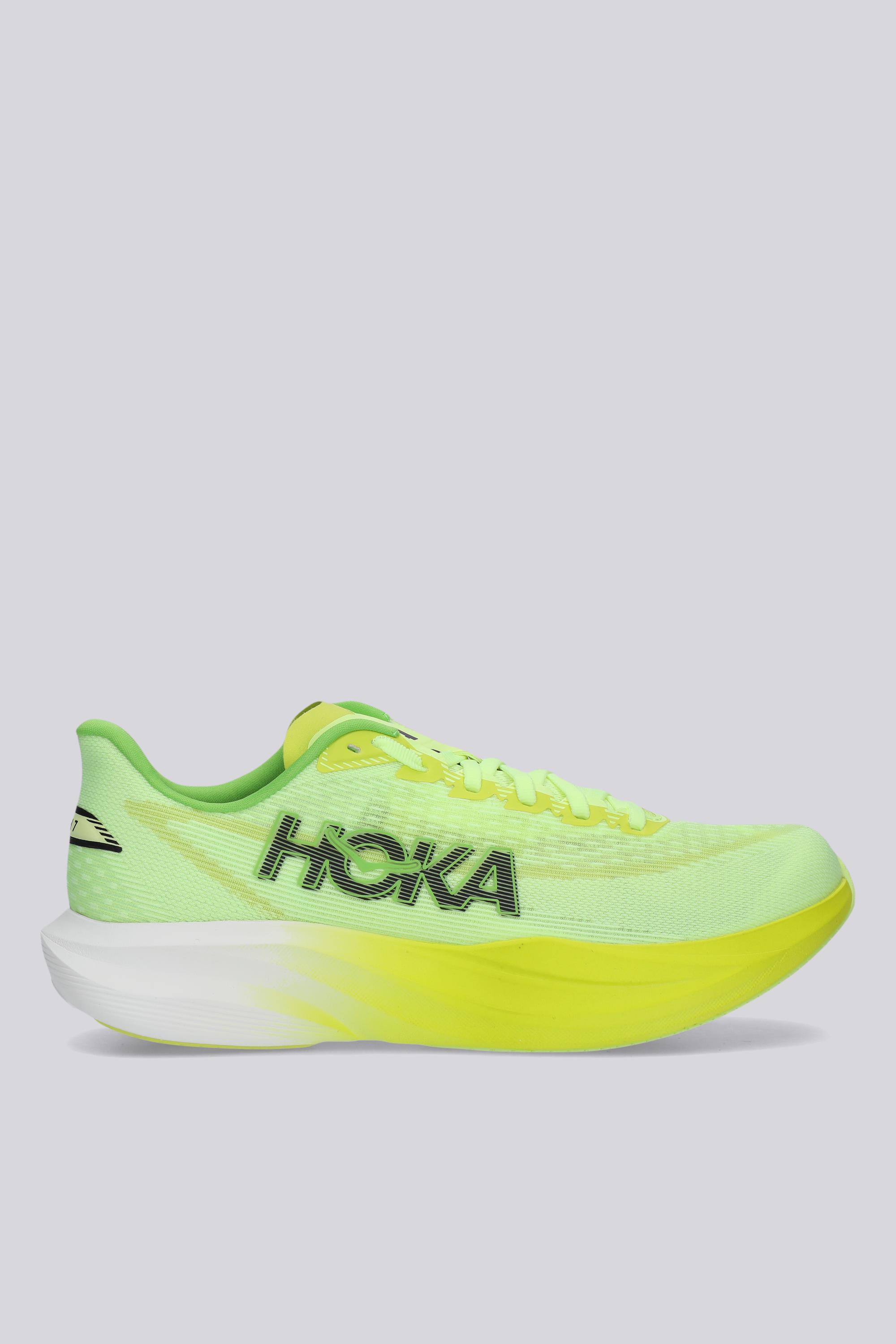


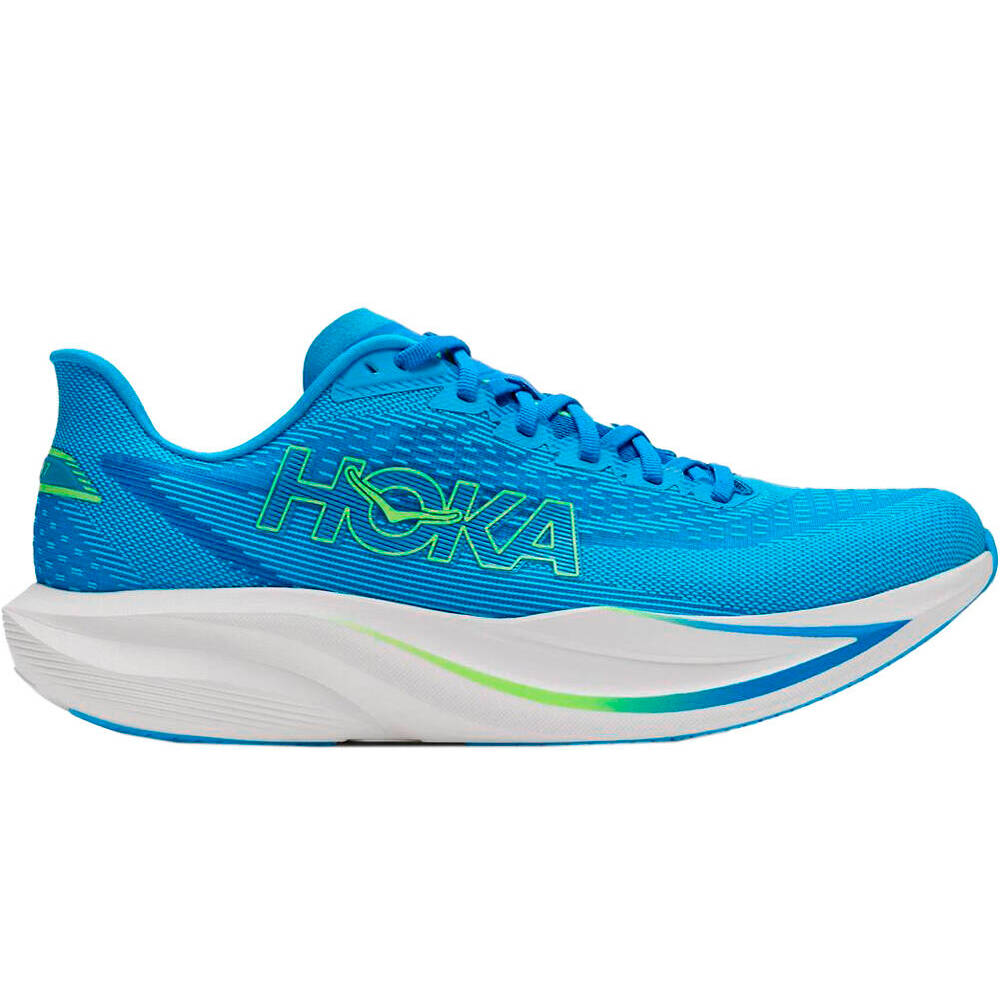
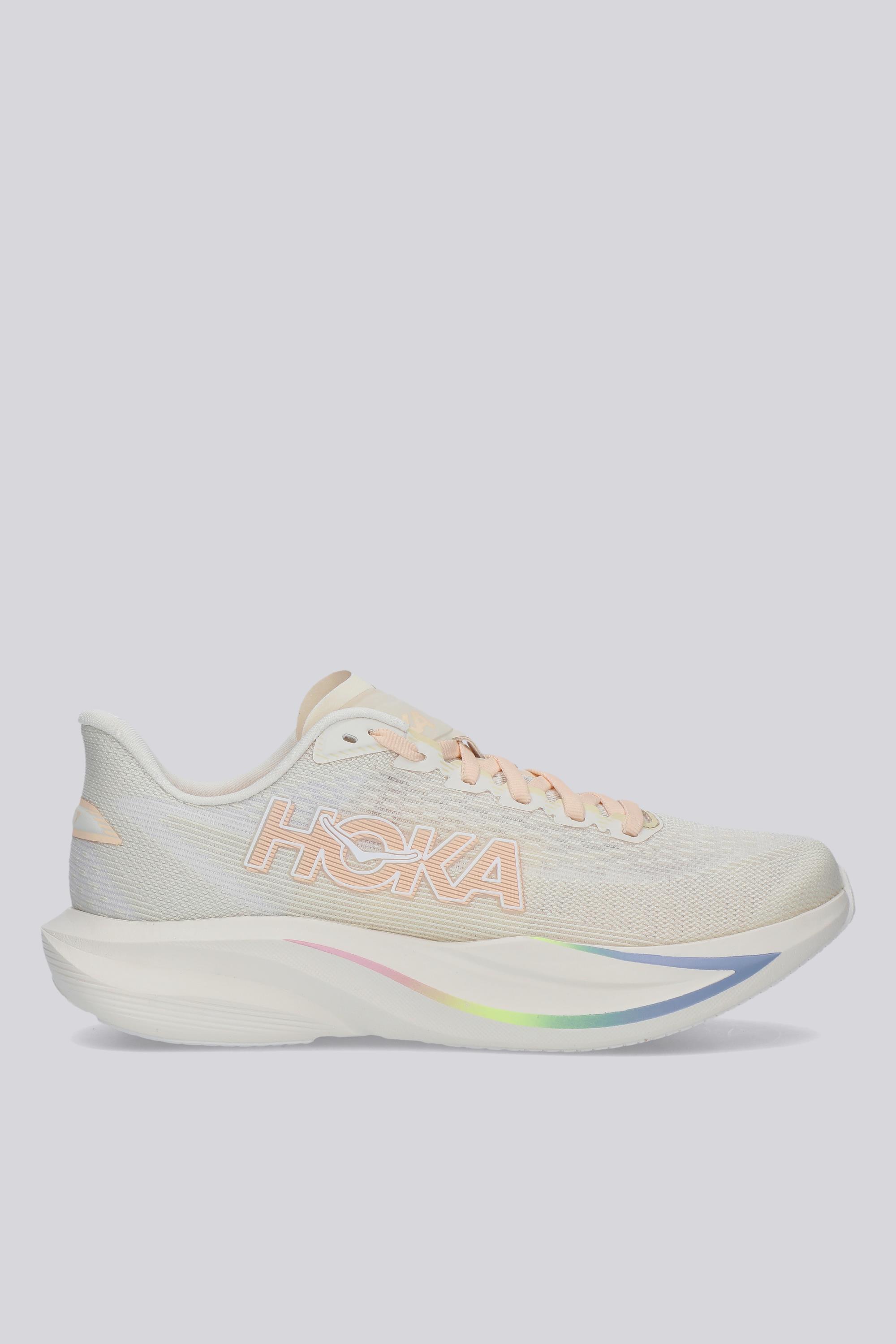
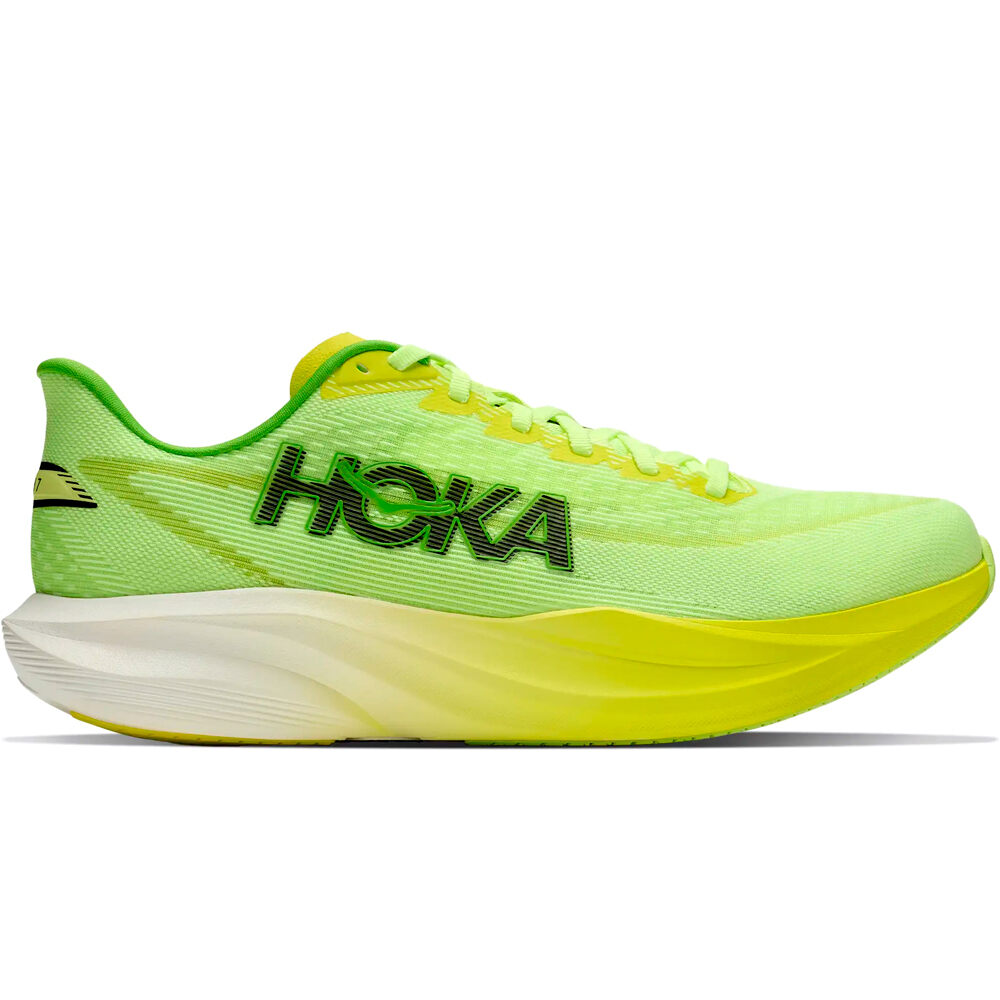
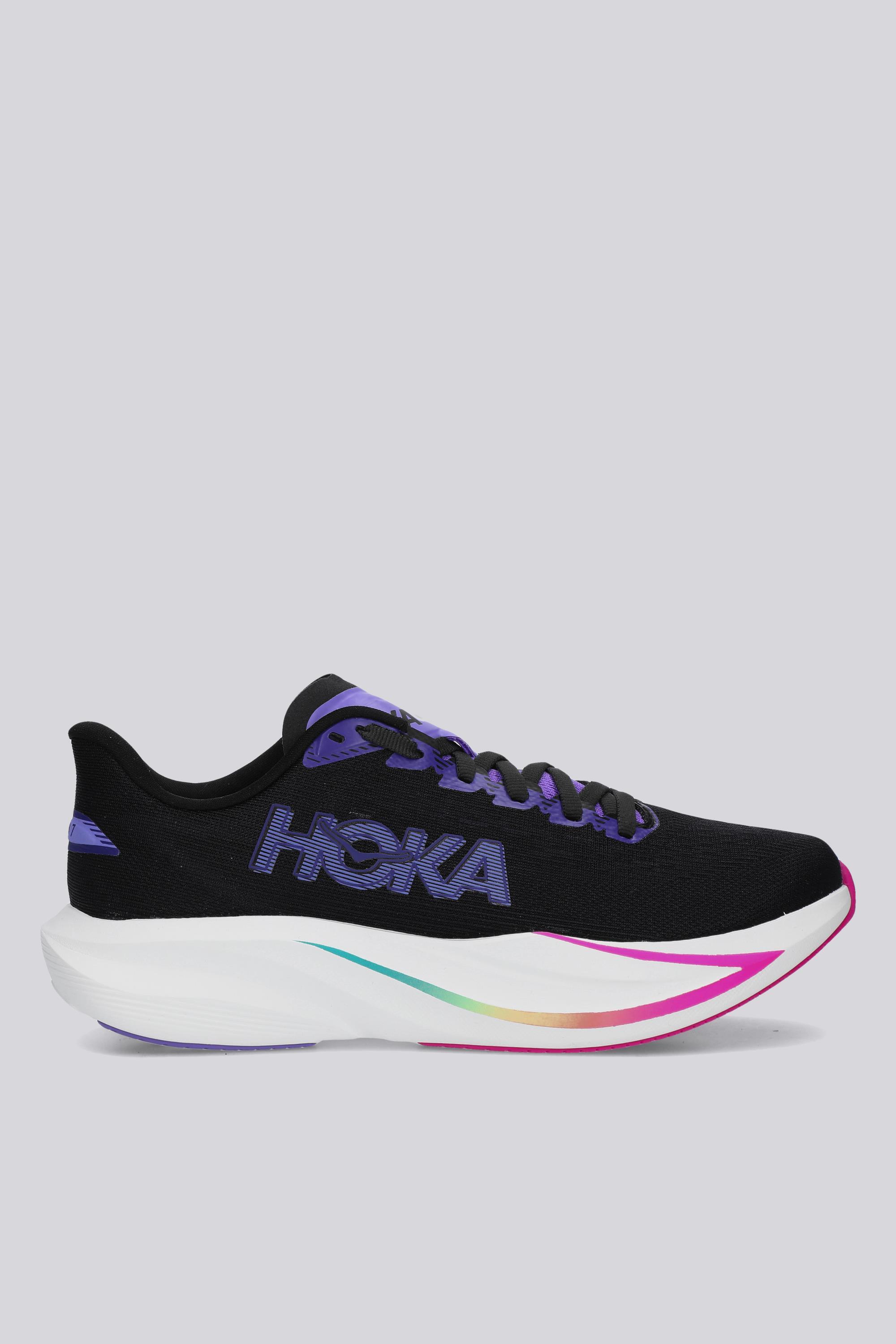
30%

COMPARAR PRECIOS POR TIENDA 4 TIENDAS


On the street this translates into a lively racing feeling. Not the artificial and exaggerated rebound of some modern foams, but something more nuanced: the cushioning absorbs the impact efficiently and returns energy in a perceptible way.
It is firm without being hard: you feel the terrain enough to run with tactical confidence - knowing exactly where you step when you press the pace - but with real protection so your legs don't pay the price the next day.
The drop is 5 mm, which favors a midfoot tread and more efficient mechanics. Added to this is HOKA's Meta-Rocker, that curved geometry in the sole that accelerates the transition between support and takeoff.
The set creates a shoe that encourages you to run fast almost reflexively, without the artificial propulsion of a plate. It's a more honest feeling: the engine is still you.
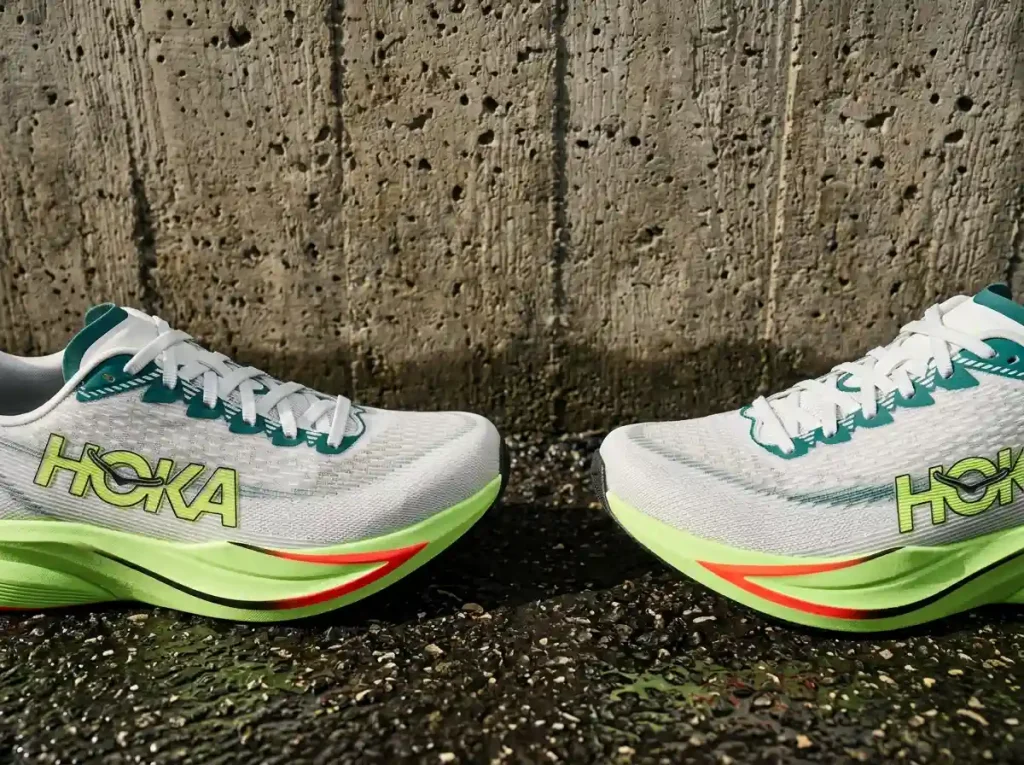
The upper: when less is more
The upper cut is made of single-layer jacquard creel. Lightweight, breathable and with enough structure to support the foot when the intensity goes up. On hot days, air circulates well through the material and the foot does not cook.
The gusset tongue - joined to the sides - eliminates the classic problem of lateral displacement during the race.
The heel buttress collects well without squeezing. The last has a little more space in the toe area than other shoes in its category, which is especially appreciated in runs that exceed one hour.
There are no embellishments: everything that is, is for a reason.
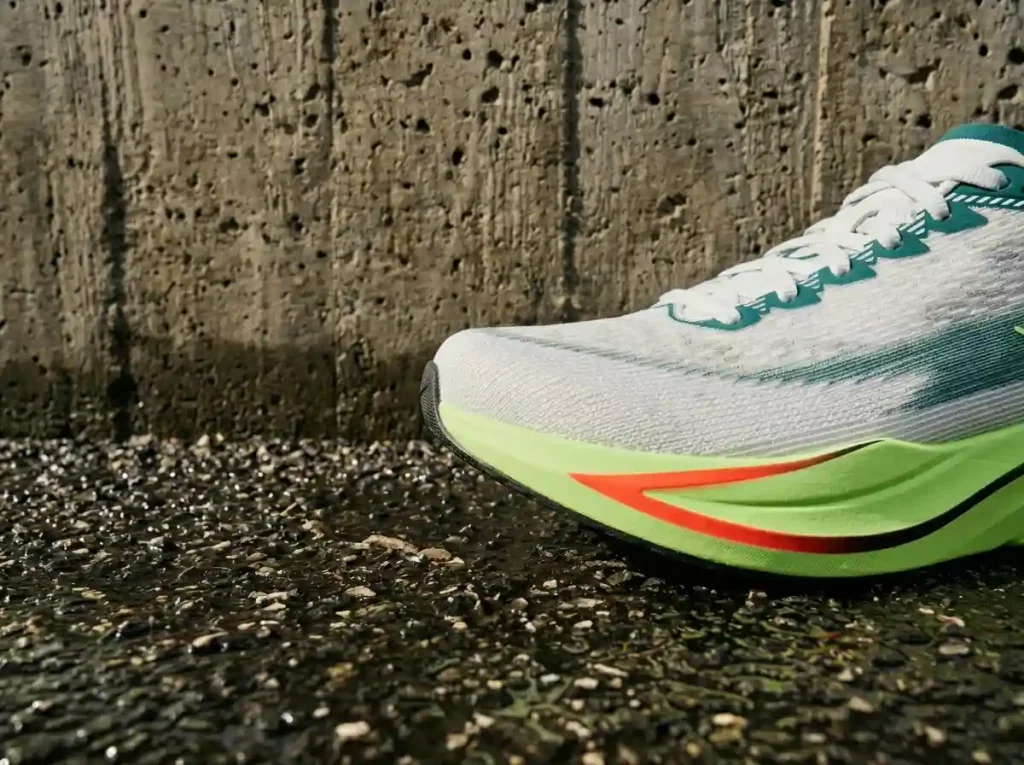
The sole: the point to look at honestly
Here you have to be direct. The Mach 7 uses the exposed foam strategy: much of the midsole is in direct contact with the asphalt, with rubber inserts only in critical areas of wear (heel and forefoot).
Dry grip is solvent. In the wet, areas of exposed foam generate less confidence and you have to use more judgment.
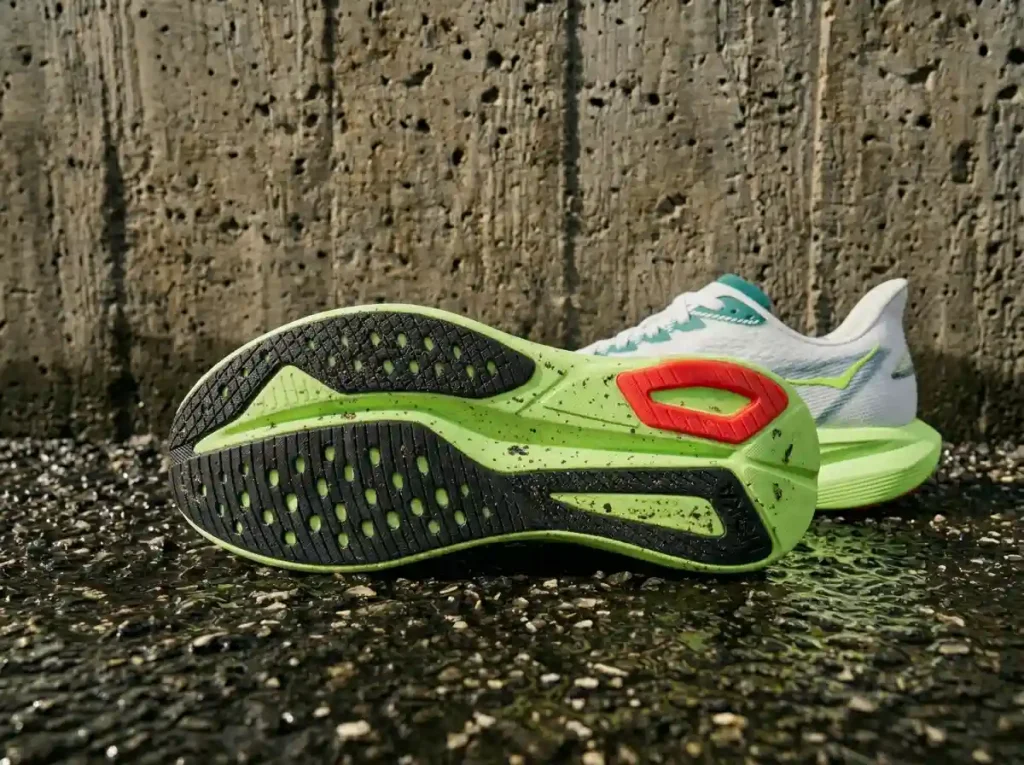
In terms of durability, estimating an optimal lifespan of between 500 and 600 kilometres. For a runner who drags their foot or regularly trains on gravel surfaces, that number may go down.
It is not a shoe to be mistreated; it is a tool that works well when used for what it has been designed for.
For what workouts and for which runner?
Here is the actual usage map:
— Series and track work: its natural habitat. At rates of 4:30 min/km downwards, the combo of lightness and reactivity results in a sense of efficiency difficult to find without a carbon plate.
— Timed filming: ideal. Those days when the plan calls for running with a spark but without breaking down, the Mach 7 accompanies without complaining.
— Competition in distances from 5K to half marathon: for the popular runner who does not want or need a badge, they are a solid option on race day. Less demanding on a muscular level than flying shoes, faster than any conventional training shoe.
— Long runs: possible with conditions. If the pace is controlled and the runner is efficient and light, they hold up. Starting at 90 minutes at a moderate-high pace, most will lack more protection.
— Soft recovery rolls: no. That's why there are other shoes. Using them on easy days is wasting their potential and accumulating unnecessary wear and tear.
The runner profile they are aimed at is clear: neutral or slightly supine footprint, weight up to 75-80 kg, who already has a running shoe in rotation and is looking for the specific accessory for quality days. They also fit with the athlete who wants to compete with something fast without taking the economic and muscular leap that a shoe with a carbon plate implies.
Heavier runners or those in need of structural support will find the Mach 7 falls short. And whoever is just getting started and can only own one pair of sneakers is probably best served with something more versatile and protective.