
There are competitions that appear on the market with the aim of revolutionizing everything and end up disappearing without pain or glory. And there are others that, without us realizing it at first, become a phenomenon. HYROX is one of the latter.
In just a few years it has gone from being a curiosity for restless athletes to filling pavilions across Europe and the Americas, with waiting lists at its events and a community growing unabated.
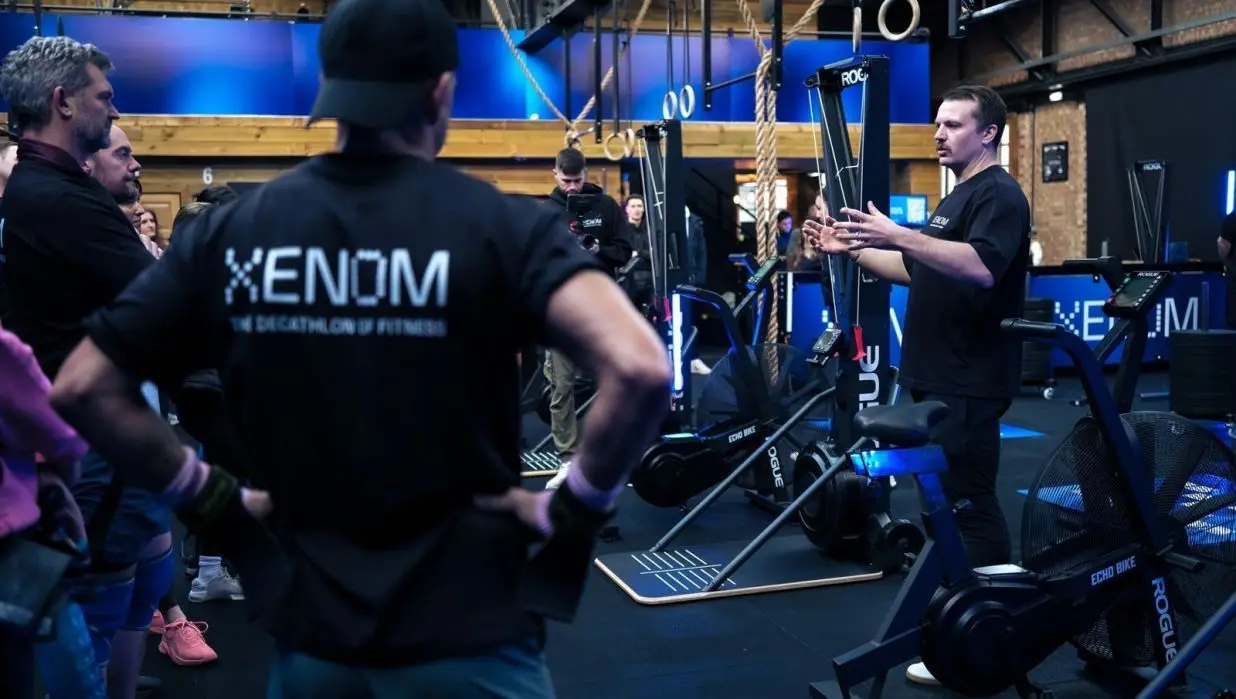
Faced with this success, CrossFit has decided that it is enough to contemplate from the barrier: its response is called XENOM, and deserves serious analysis because it is not a rushed copy or a second-class product, it has an identity of its own that can change the map of competitive fitness.
First, let's understand why HYROX works
Before talking about XENOM, we must recognize the merit of what HYROX has achieved, because it is not by chance.
The formula is so simple that it is almost disconcerting: eight kilometers of race divided into one-kilometer sections, interspersed with eight functional workstations always in the same order. SkiErg, Sled Push, Sled Drag, Burpee Broad Jumps, Rowing, Farmer's Carry with Kettlebells, Sandbag Lunges and Wall Balls.
That's it: it doesn't change from one event to another, there are no surprises, you don't need to know specific weightlifting or gymnastics techniques.
This predictability, which at first glance might seem like a limitation, is actually its greatest virtue.
The athlete knows exactly what he is facing, he can train specifically for each season, measure his times from one edition to the next and compare his performance with that of any participant in the world.

It is the same principle that has made the marathon relevant for more than a century: distance does not change, and that turns each result into a piece of data with real value.
The other great success of HYROX was to build a bridge between two communities that until then lived on their backs: runners and strength athletes.
Eight kilometers of running means that aerobic capacity matters a lot.
A crossfitter who has never trained running notices it as soon as he goes out to run the third kilometer with his legs already loaded with the first sled thrusts. And a runner who has never touched a kettlebell discovers that there are types of fatigue that his body is not prepared for.
That mix, that calculated discomfort, is what has made HYROX more than just a competition. It's a sporting argument.
What XENOM is and where it comes from
XENOM is CrossFit's proposal to compete directly in the territory of hybrid fitness. The name has its crumb: read backwards it is "MONEX", which pronounced in English sounds like "No Mex", internal jargon of CrossFit to refer to something that is not a traditional metcon, a metabolic workout to use. A statement of intent disguised as a pun.
The base structure of XENOM is different from that of HYROX.: instead of eight linear blocks, it proposes three rounds that repeat the same scheme: approximately one kilometer of stroke followed by three functional workstations.
This adds up to a total of three or four kilometres of running and nine workstations, although with a fundamental difference from its rival: the movements are not fixed and can vary from one event to another.
There is the philosophical heart of CrossFit, the same one that has been repeating for two decades that the best preparation is the one that makes you able to respond to any stimulus. “Prepare for the unknown,” says the motto. XENOM transfers that idea to the hybrid competition format.
The differences between XENOM and HYROX
Although they share the same territory, XENOM and HYROX have different DNA: each responds to a different idea of what it means to be fit.
The race weighs differently on each
At HYROX, eight kilometres in cumulative fatigue conditions is a determining factor. There are extraordinarily strong athletes who collapse because their aerobic capacity does not accompany them.
The race acts as a constant test of recovery: how long it takes to return to a decent pace after having dragged a sled or done a hundred wall balls.
At XENOM, with approximately half a kilometer, running is more explosive than resistant. What is measured is not so much your ability to hold the type for an hour and a half as your ability to accelerate, catch your breath, and speed up again.
They are different requirements that require different profiles.

Predictability versus adaptability
HYROX is an exam whose questions you already know. You can study it with surgical precision for months, optimize each season, practice the race rhythms between blocks and arrive at the event knowing exactly what you are going to find.
XENOM asks you for something different: to be ready for whatever comes next.
That implies a broader, less specialized athlete with a larger repertoire of skills. For some this is a threat; for others, the main attraction.
Movements and Barrier to Entry
HYROX exercises are deliberately universal. Any active person can learn how to do them safely in just a few sessions.
This has been key to their massive expansion - you don't need to be a crossfitter or have specific training. XENOM, although in its first events it has shown accessible movements such as devil's press with dumbbells, box jumps or kettlebell snatches, leaves the door open to incorporating more technical elements according to the mature format.
That can be an advantage to attract the CrossFit community, but also a brake on those who come from outside.
Effort management changes completely
HYROX is a dosing test. It lasts between sixty minutes for the fastest and an hour and a half or more for the rest.
Coming out too strong at the beginning, either in the race or in the early seasons, has consequences that drag all the way to the end.
It is a test of patience as well as fitness. XENOM has a structure of three identical blocks that invites a different strategy: find a high but sustainable level of effort within each block, knowing that the total duration is shorter and that there is a “reset” principle in each new round.

For whom does each option make sense
If you are a runner or triathlete and want to get into hybrid fitness, HYROX is still the most natural gateway.
Your aerobic engine is a real asset, the eight kilometers of running give you an advantage over athletes who come purely from strength training, and the movements are learnable in a few weeks of specific preparation.
XENOM, on the other hand, may interest you as an off-season development tool. The shorter running distance and greater intensity in the seasons force you to work on qualities that traditional resistance training does not develop: power, explosiveness, lactate tolerance in short and repeated efforts.

Whether you're training for an Olympic distance triathlon or a marathon, getting into XENOM preparation during the winter can bring you things that months of continuous filming aren't going to give you.
For a veteran crossfitter, XENOM is familiar terrain with an added running component that makes it more complete.
For someone who comes exclusively from the bodybuilding gym, both options are a considerable challenge, even if HYROX demands building a minimal aerobic base first.
Footwear, the eternal dilemma of the hybrid athlete
One of the most repeated questions among those preparing for these events is which shoe to wear. The honest answer is that there is no perfect option, but the least imperfect for your profile.
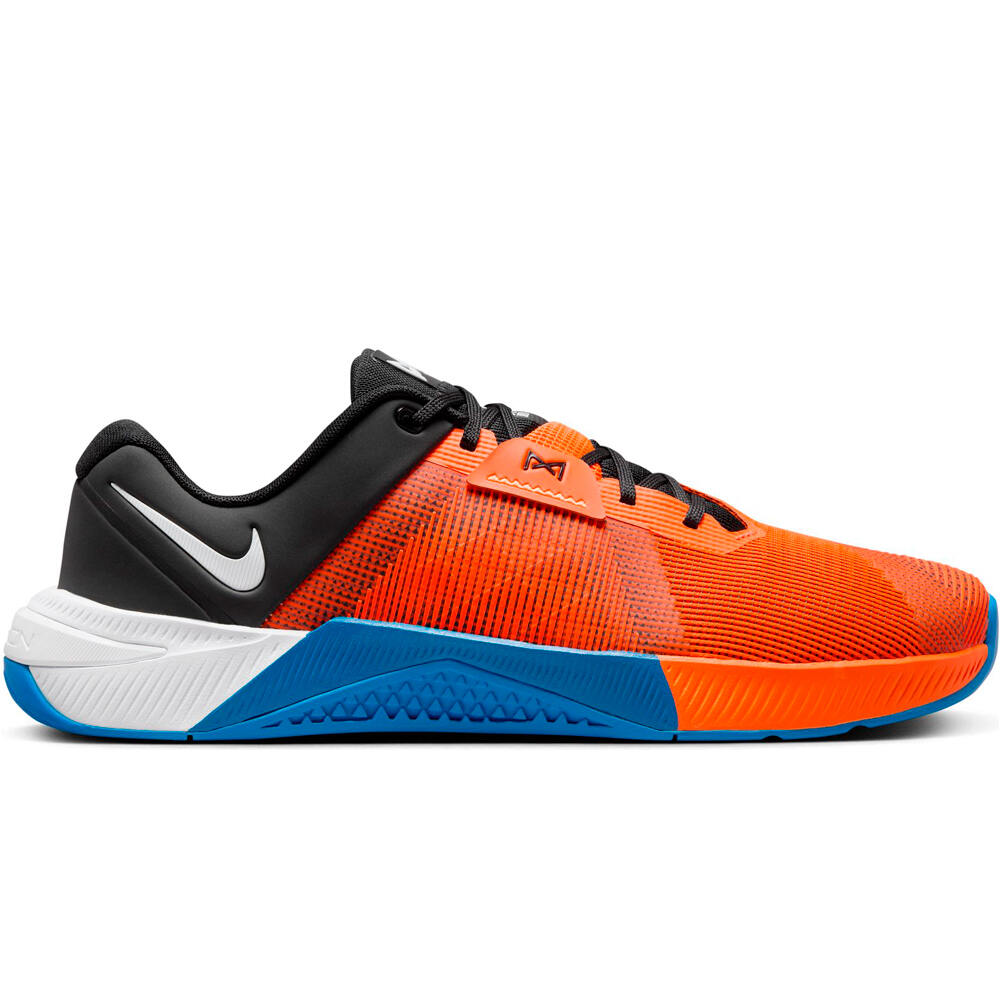
NIKE METCON 10
 Activo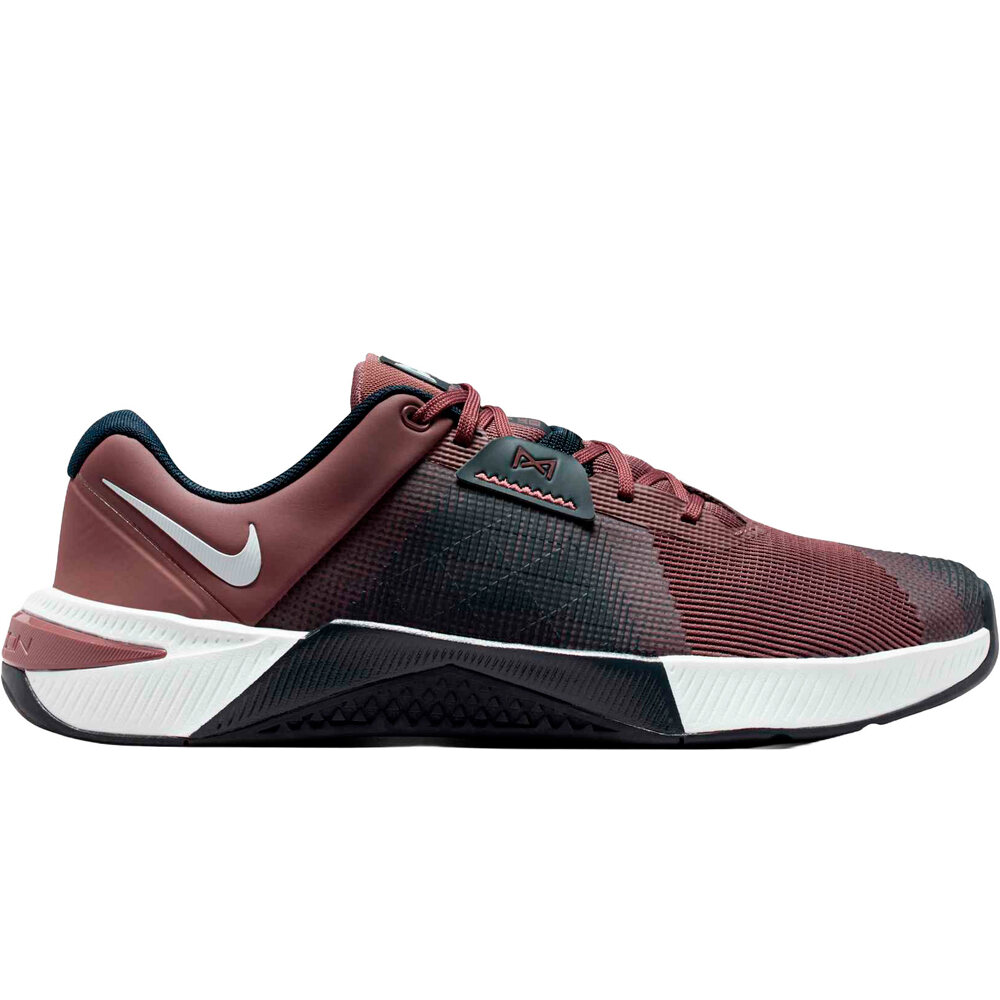





35%

COMPARAR PRECIOS POR TIENDA 4 TIENDAS


The cross-training shoes —Nike Metcon, Reebok Nano, NOBULL— offer the lateral stability and flat base that functional movements require, but their cushioning for running is limited. At XENOM, with fewer total kilometers, they can be a good option.
At HYROX, five miles in a strength-training shoe starts to show on your feet and knees towards the end.
Conventional running shoes work well in the running part but lack the rigidity and stability necessary to push a sled or make lunges with load. The more maximalistic the shoe, the worse it performs in lateral movements.
The midpoint that many athletes are finding are models designed specifically for this kind of hybrid use: Inov-8 has several models oriented to this niche, and Hoka with its Kawana has gained followers among those who prioritize a little more comfort in the race without sacrificing too much in stability. The final choice depends on your weaknesses: if running is your Achilles' heel, prioritize cushioning; if fu movements
Can XENOM displace HYROX?
That's probably not the right question.
HYROX has something that is not built overnight: a globally recognized standard, an already formed community and the advantage of having been the first to define this space.
It is the reference format, the point of comparison. That has enormous value that goes beyond the quality of the product itself.
XENOM, however, has behind it the organization with the greatest penetration in the world of functional fitness.
CrossFit can integrate this format into thousands of affiliate pits around the world almost immediately, ensuring you a participant base that few sporting events could replicate from scratch.
Most likely, and most interesting for athletes, both formats coexist and thrive attracting different profiles.
HYROX for those looking for a measurable and transferable standard, with running at the forefront. XENOM for those who prefer intensity over duration and enjoy variability as a stimulus.
What is clear is that hybrid fitness is no longer an emerging trend.
It's a consolidated category, and for two organizations with the resources of HYROX and CrossFit to compete to lead it can only mean one thing for us: more choices, better quality, and more accessible events in more cities.
For athletes who have been searching for years for ways to be more complete - run faster, lift more, recover sooner, hold on longer - this moment is exactly what we needed.