
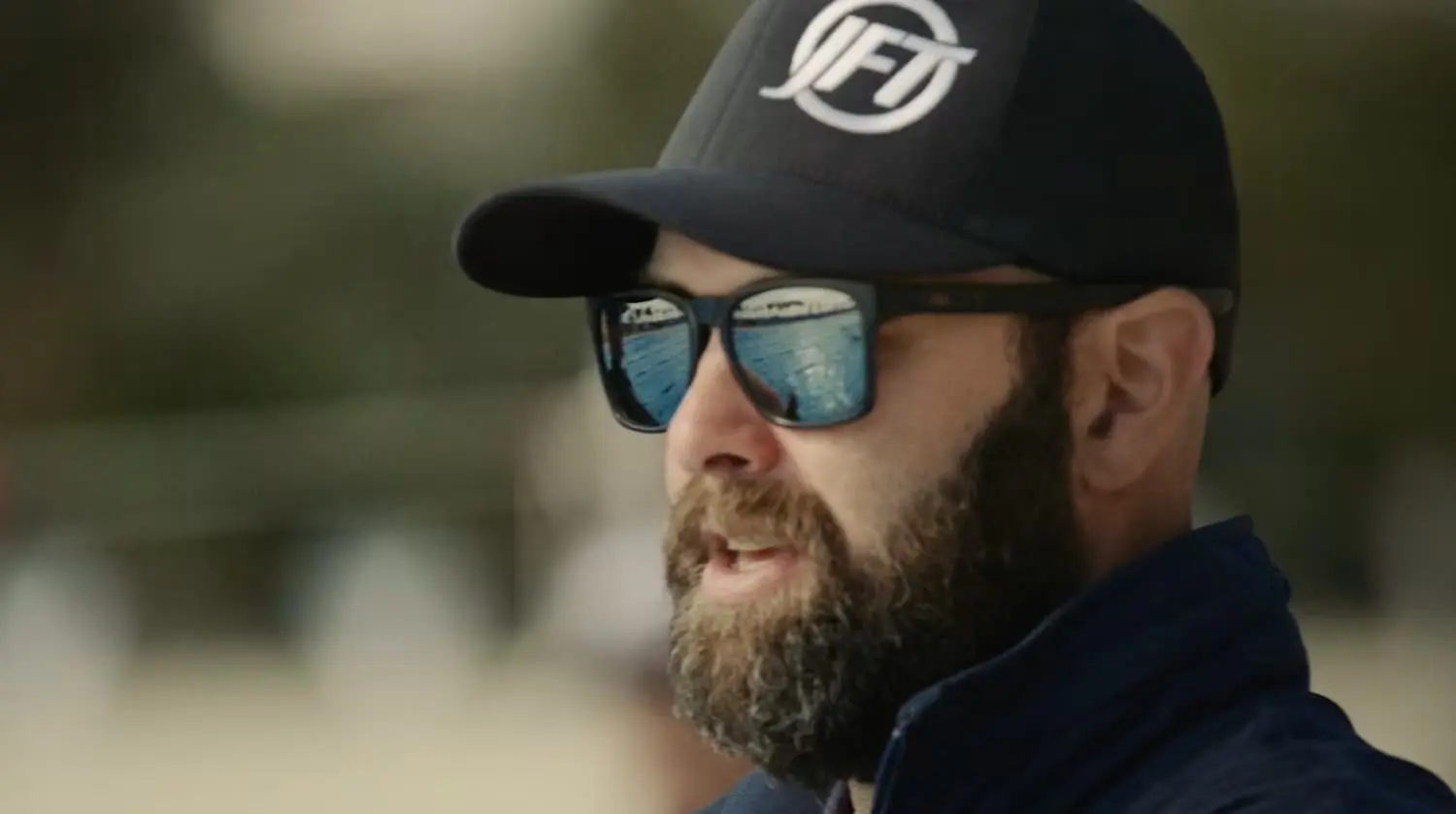
For many triathletes, improving in the water remains a constant battle. Most come to the sport without a past as a swimmer and with obvious difficulties to acquire technique in an unnatural environment. That's where Joel Filliol, one of the key figures in short-distance triathlon, comes in.
Since breaking into the sport, the Canadian has trained figures such as Mario Mola, Richard Murray and Jake Birthwistle, among others, and has accumulated six elite world titles with his # JFTcrewgroup.
From that position of knowledge of professionalism, in 2012 he began to list a series of rules on swimming training. In them, he proposes a more direct and demanding way of understanding water training.
More meters, more frequency and more base
Fitness rules: without an aerobic base, the technique does not hold up. Swimming better means keeping the gesture when the body is loaded, not just executing it rested.
Frequency matters more than duration: short sessions repeated during the week generate more adaptation than two long workouts. In such a technical discipline, adaptations need constant encouragement.
On the other hand, if you compete in medium or long distance, the training should be similar: long sets, sustained rhythms and sufficient volume to prepare the body for what will come in the race.
Ultimately from this first block, swimming hard is also a skill. Many triathletes do not know their limit in the water or know how to maintain it. That requires physical foundation and repetition in demanding efforts.
Technique without obsessions and with context
For Filliol, traditional technique exercises don't work for most. The problem is the method: in adults with little motor experience in the water, breaking down the gesture is usually ineffective because they do not perceive what they are doing well. They do not distinguish the position of the body or the movement of the arms, so the technical exercises do not produce results. He prefers to work the entire gesture.
Rubbers, shovels and pulls have their place, with clear intent. The paddles serve to feel the activation of the bibs and improve grip, not to cover fatigue. The rubber forces you to maintain your body position and gives immediate feedback when something goes wrong.
The goal is to swim fast, and in open water that involves adapting the stroke frequency according to the situation. Neither maximum long stroke nor cycle counting is the way to go. The head, the shake (to stabilize, not to propel) and the technical quality in short series are worked better as a result of the training than as a declared objective.
Swimming in triathlon
For Filliol, swimming conditions what happens next: it affects fatigue, the group in which you go out and the rhythm of everything that follows. Leaving the water with less fatigue and in a faster group changes the dynamics of the rest of the race.
Filliol includes quality in almost all sessions: changes of pace and blocks of strength, without reaching the maximum in each workout. If you have to record the session so as not to forget it, it is too complex.
The lack of external demands is the main brake for triathletes who train alone. Swimming in a group provides constant references and the pressure to compete in each series.
Finally: the material is not a crutch, and repetition has no substitute: repeating the same gesture hundreds of times progresses more than exploring variants.