
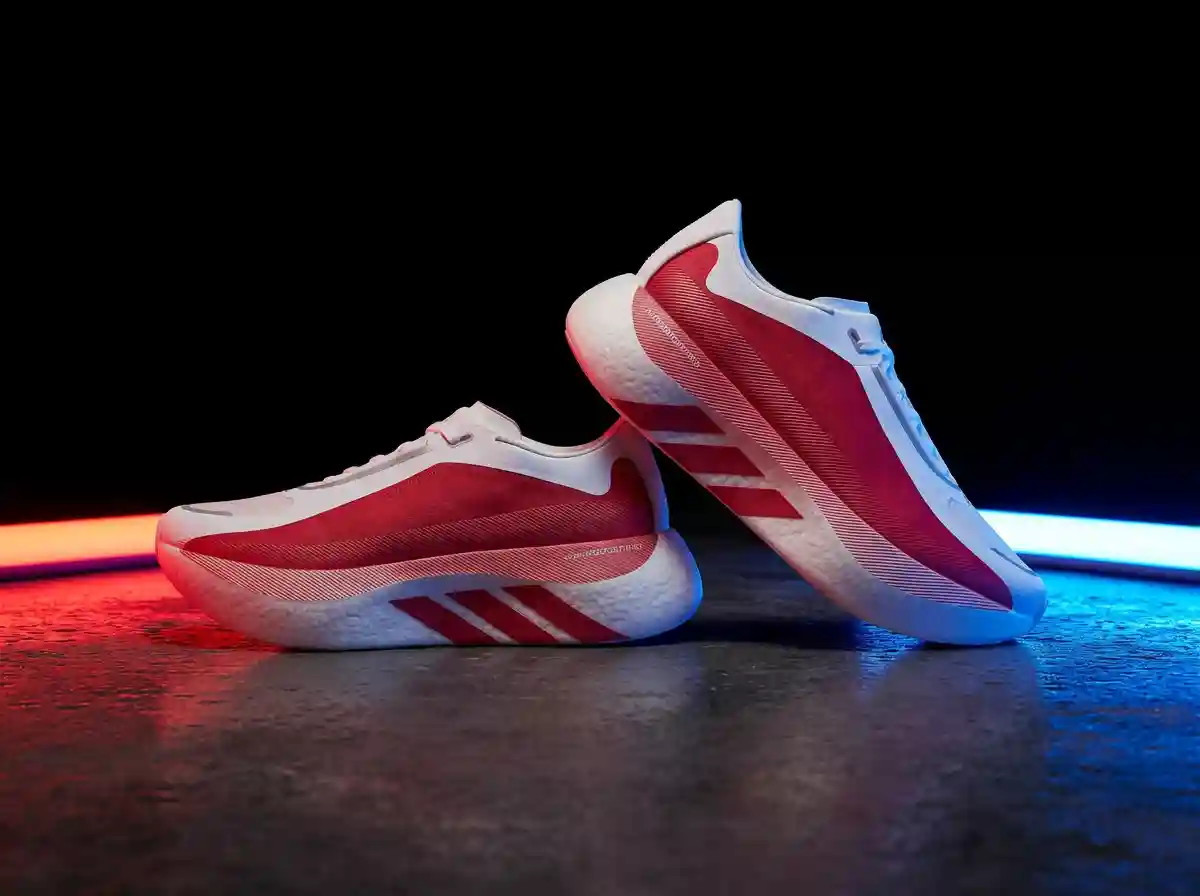
Adidas launches its most ambitious training shoe in years on March 17: the Hyperboost Edge is not a cosmetic update to the Boost saga: it's a change of chemistry.
The German brand abandons the TPU that made it famous and opts for a PEBA compound in pearl format, maintaining the grainy visual identity of the classic boost but with radically different mechanical properties.
The result is a 247-gram supetrainer with 44.6 millimeters of heel stack and an energy return of 73.6%.
At 200 euros, the question is not whether the technology is good - the numbers say yes - but whether this shoe is for you.
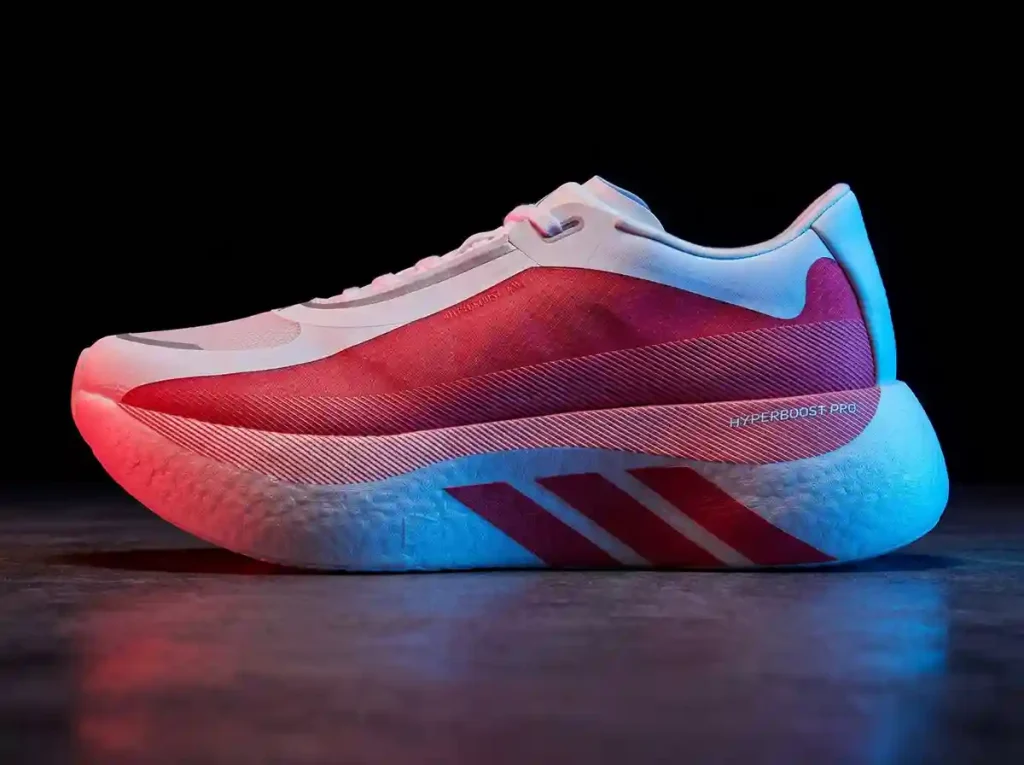
The Hyperboost Pro midsole: what changes from the lifelong Boost
The original boost was revolutionary because the pelletized TPU offered consistent bounce and exceptional durability.
The problem with TPU is its density: it weighs. The transition to ePEBA solves exactly that.
PEBA is the same base compound used by the most advanced competition foams on the market - Adidas' own Lightstrike Pro, Nike's ZoomX, ASICS 'PEBA - but here it is manufactured in fused pearls instead of continuous block.
That preserves the isotropic distribution of compression that characterized Boost while injecting the elastic properties of pure PEBA.
Laboratory data is clear: 73.6% energy return versus an industry average of 58.6%. A hardness of 32.5 AC on the Asker C scale when the industry average is around 36.2 AC.
And an impact absorption of 154 SA in the heel and 145 SA in the forefoot, well above the average 130 SA.
In practice, this translates into a shoe that cushions massively without feeling swampy. The foam returns energy with enough vividness to be usable in tempos and series, not only in slow shoots.
There is an additional fact that deserves attention: subjected to -18 degrees Celsius for 20 minutes, the stiffness of the material only increases by 9%, compared to 24% on average in the sector. For those who train in winter, that means that the shoe behaves the same at zero degrees as at fifteen.
Geometry and footprint: who it works for and who it doesn't
The 44.6-millimeter heel stack exceeds the World Athletics legal limit of 40 millimeters, which automatically excludes it from federated competition.
It's not a problem for the popular runner, but it defines their character - this is a training tool, not a running tool.
The effective drop is 6.5 millimeters, a midpoint that theoretically accommodates varied tread patterns.
The rocker is aggressive, with a curvature that accelerates the transition and assists propulsion on takeoff.
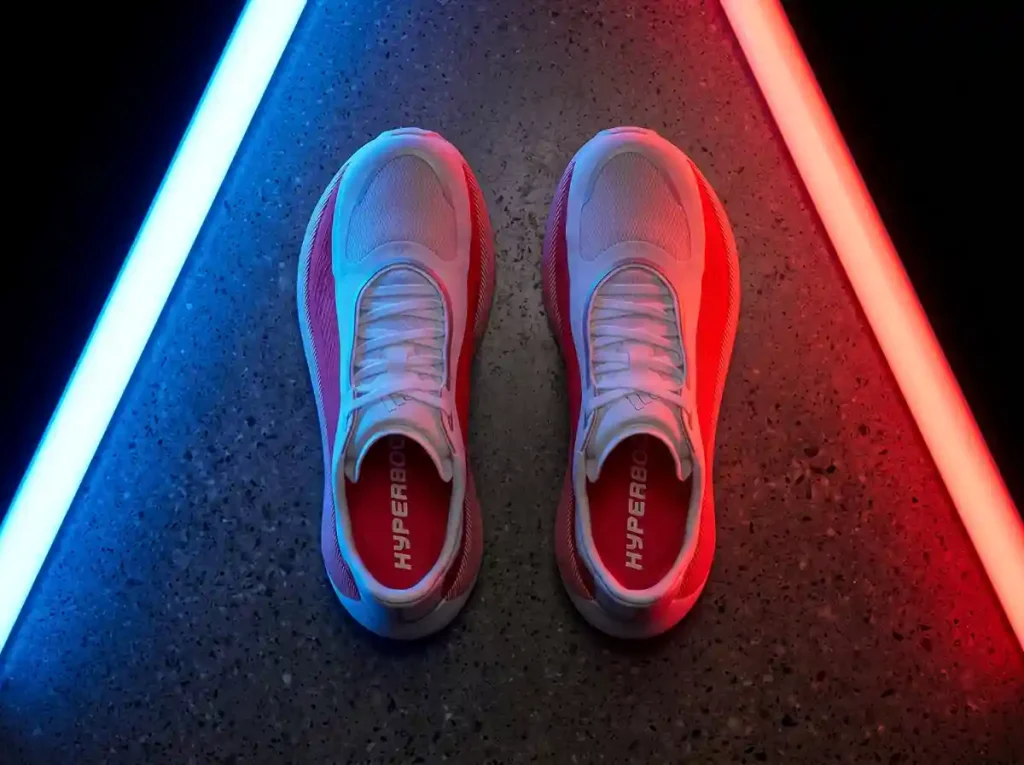
For mid-foot or forefoot runners, this set works well: the reactive foam and the rocker arm are fed back to generate a fluid and propulsive stride cycle at threshold rhythms.
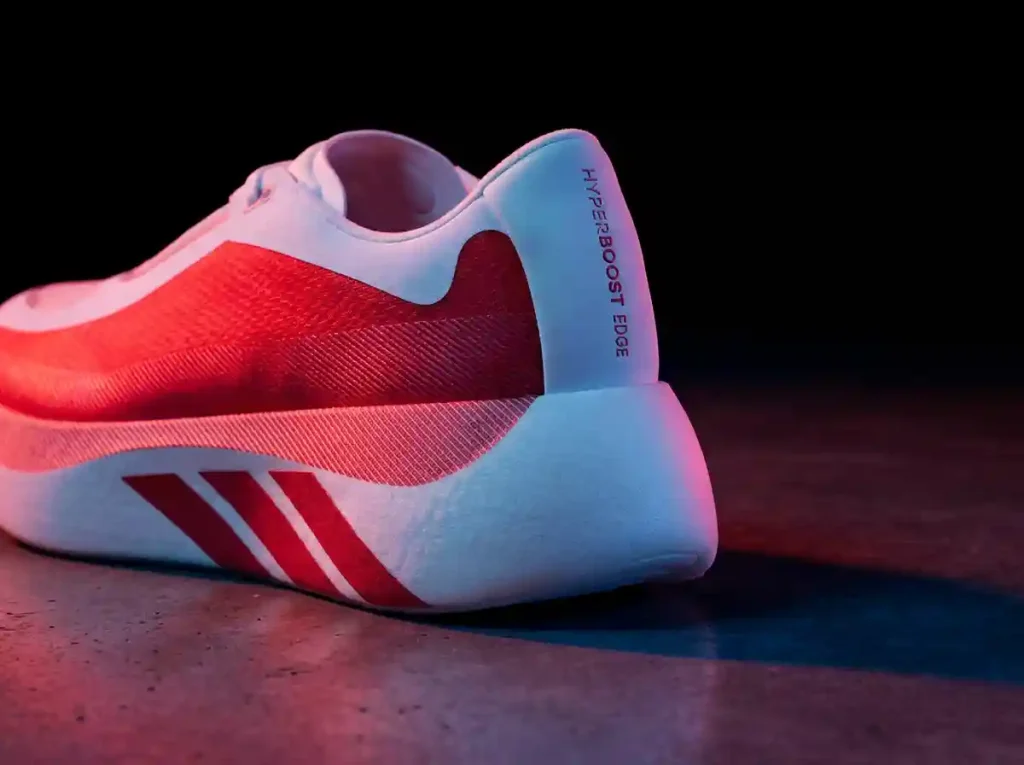
The problem is in the heelers, which are statistically the most popular runners. The Hyperboost Edge lacks a heel bevel-that angular curvature at the back that softens the initial impact and slows plantar flexion.
Instead, it has a posterior widening of the foam that acts as a lever in the opposite direction: it anticipates the impact and generates a sudden transition towards total support.
The anterior tibialis has to work much harder than usual to stop the fall of the foot, with the consequent risk of fatigue and periostitis in runners who accumulate volume.
If you land with your heel, this shoe will require a long adaptation period or it is not your shoe at all.
Upper PRIMEWEAVE: what's good and what's going to bother you
PRIMEWEAVE fabric is lightweight, with good side support and heat-sealed elements that eliminate seams in friction areas.
The three bands have been moved to the midsole, which allows the upper to better adapt to the foot without rigid layers on top. So far, so good.
There are two problems and they are specific: first, the toe cap: 71.4 millimeters wide and 24.8 millimeters free height. Those measurements are those of a competition shoe, not a supertrainer designed to accumulate kilometers.
Any runner with a wide foot, high instep or long toes will feel dorsal and lateral pressure from the first kilometer. So its use is not recommended because the risk of Morton's neuromas with continued use is real.
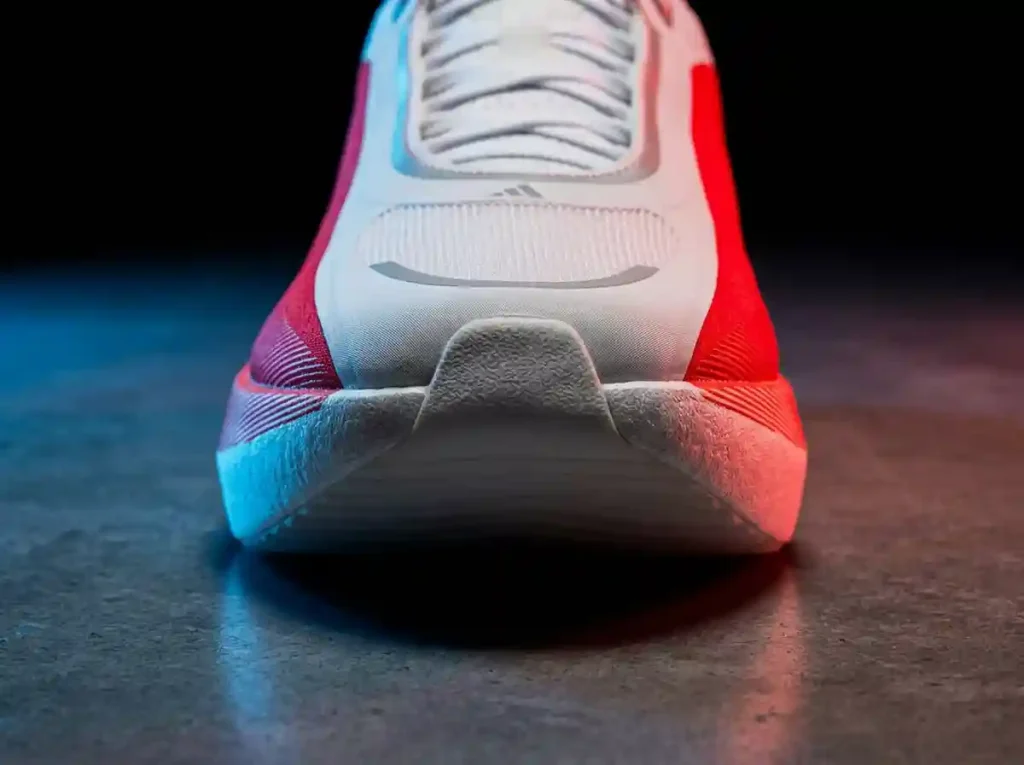
Second, the heel collar: the top of the neck is inelastic and sits just below the malleoli. On flat terrain it is tolerable, but on uneven surfaces or cant roads, that edge rubs against the ligaments of the ankle with each stride.
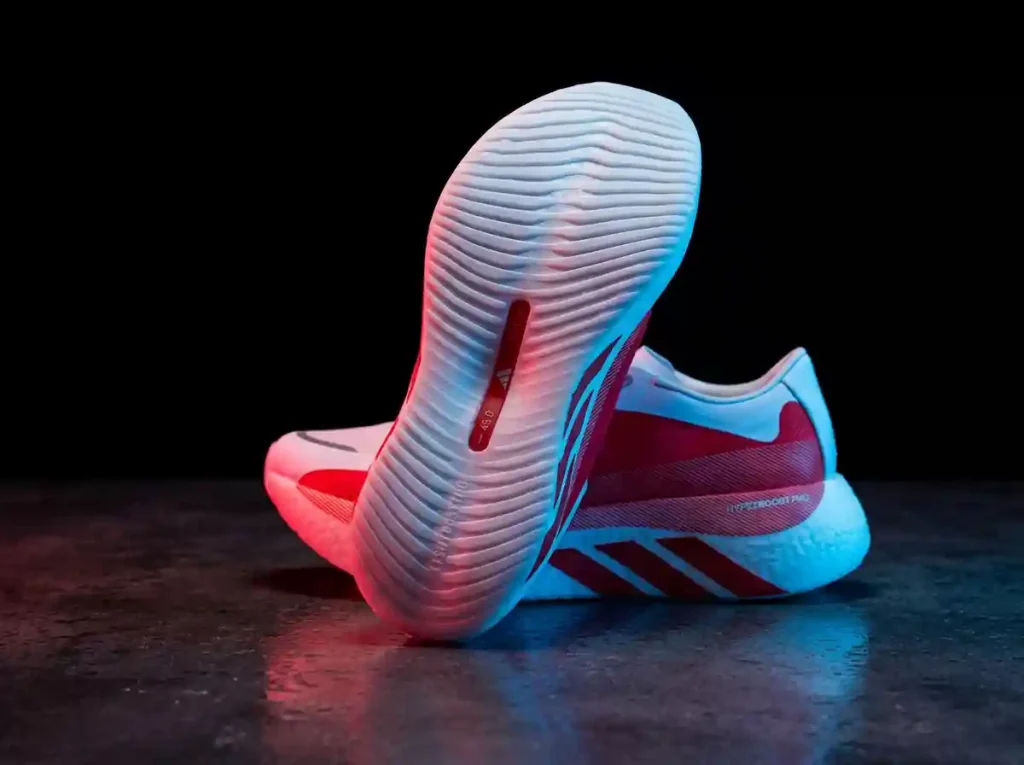
LIGHTTRAXION sole: 2 millimeters that work, with conditions
Adidas abandons Continental rubber and opts for a thermoplastic polyurethane compound mixed with rubber just 2 millimetres thick, compared to the industry average of 3.2 millimetres.
The goal is to reduce weight in the area furthest from the center of rotation of the leg, where each gram has more impact on rotational inertia.
On asphalt, the grip is excellent, even in the wet. After more than 80 kilometres of testing, wear is virtually imperceptible.
Ribbed design works in the city. The problem comes as soon as there is dirt, mud or gravel: the grooves become saturated and the sole immediately loses grip. This shoe does not step on a dirt road.
Are the 200 euros worth it? Where it fits in the market
The most direct comparison is with the ASICS Megablast, which costs 225 euros. The Megablast weighs 218 grams compared to 247 grams for the Edge, i.e. 29 grams less with a similar stack.
However, its 9.9 mm drop loads the knee more and alters the kinematics compared to the 6.5 mm of the Adidas.
The energy return of the edge is slightly higher in the laboratory. In toe, ASICS is more anatomically generous.
In short: if you have wide foot or knee problems, the Megablast wins. If you prioritize footfall kinematics and low drop, the Edge has arguments.
Compared to the Brooks Glycerin Max, also at 200 euros, the difference is in category: the Brooks weighs 305 grams and its energy return is low, which relegates it to recovery shoots. The Hyperboost Edge can do that and much more.
Within Adidas' own catalogue, the Adizero EVO SL costs 150 euros, weighs 223 grams and uses pure Lightstrike Pro as a block. It is lighter and faster, but its hardness of 43.5 AC and its 36 mm stack make it a demanding shoe that does not protect in high volumes. The Hyperboost Edge is the option for those who want PEBA reactivity with real protection.