
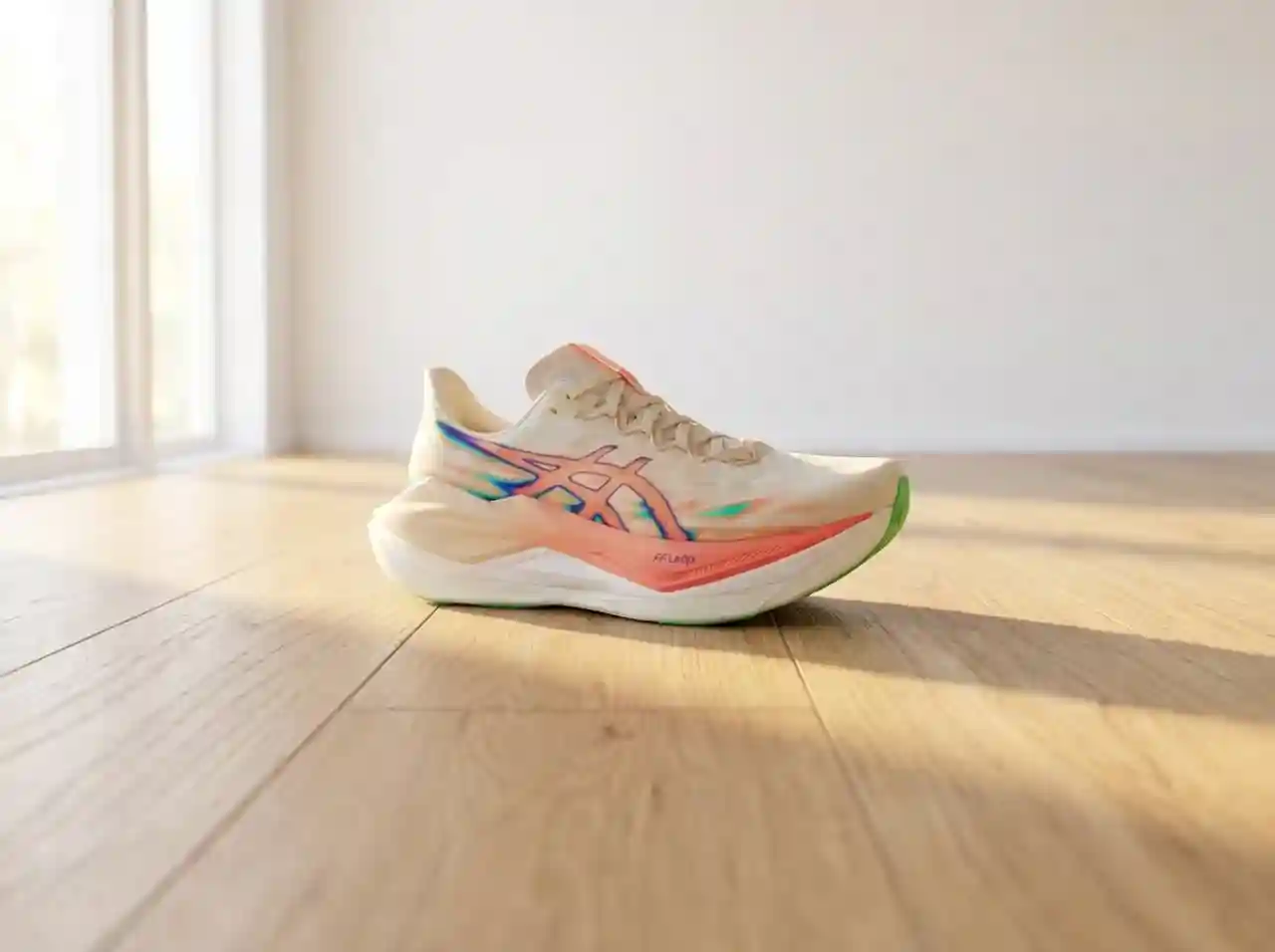
There are sneakers that sell themselves and there are sneakers that have to be explained. The ASICS Superblast 3 belongs to the second category: although it seems a simple shoe to explain, its proposal does not fit into the usual drawers.
Why? Well, because it is not a competition shoe. It does not have a carbon plate, it is not designed to beat records in the last kilometer of a marathon.
Nor is it a recovery shoe of those that look like hospital shoes. It is what the sector has begun to call a maxi-trainer: a model with a maximalist profile, first-class foams and premium construction, designed to absorb the bulk of the weekly mileage without the legs paying the price.
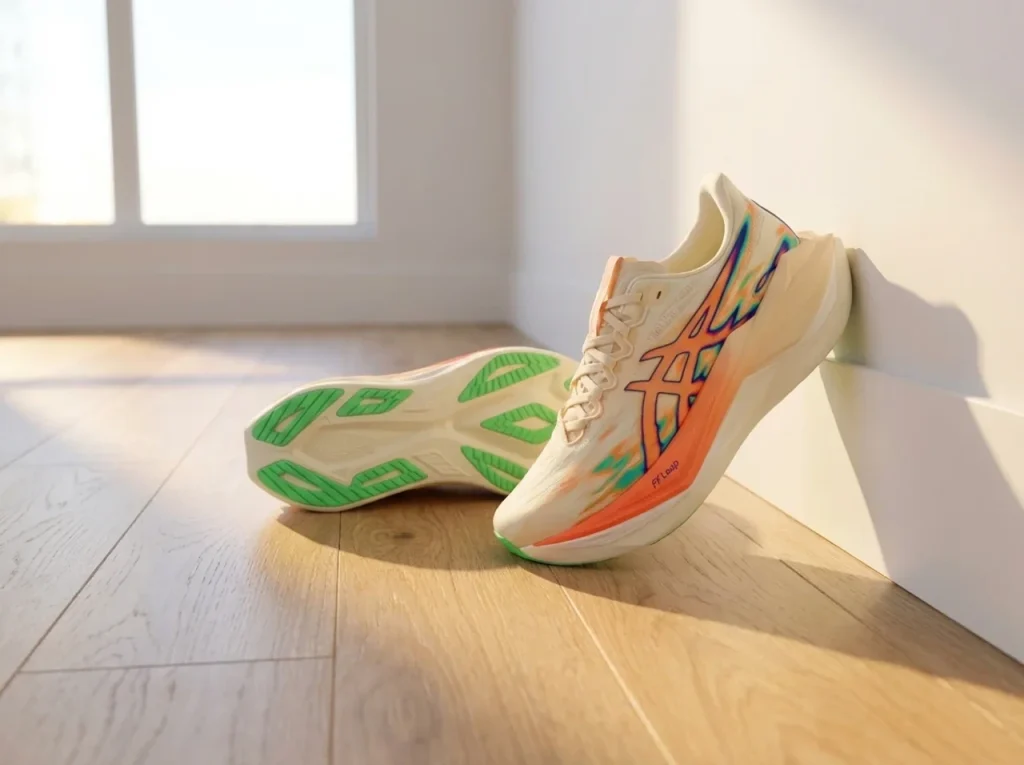
Superblast 2 was already a reference in this category. Reactive, cushioned, surprisingly light for its size. But it had a weak point that heavier runners or runners with less refined technique immediately noticed: some instability at slow rates and in changes of direction.
ASICS has put that issue at the center of the review and built the third version around it.
ASICS SUPERBLAST 3
 Activo
COMPARAR PRECIOS POR TIENDA 1 TIENDAS
The midsole: same foams, different geometry
ASICS has not changed the foam formula compared to the previous version. The combination of FF Blast Turbo at the top and FF Blast+ at the bottom was already working, and the brand has had the criteria of not touching it.
What has changed is the shape. The base is now noticeably wider, especially at the midfoot and heel. It's not a cosmetic change.
In practice, it completely transforms the feel of the shoe: where before there was a certain tendency to tip over on slow supports or in curves, there is now a solid platform that transmits confidence from the first kilometer.
The FF Blast Turbo continues to be the leading foam. It is the same one that ASICS uses in its competition models -the Metaspeed family-, and it is recognized in that live rebound and that point of lightness that pushes you to run a little faster than planned.
The denser FF blast+ acts as a cushioning base and is the one that gives body to that new stability.
The rocker is present, with that arching transition that carries the foot from landing to takeoff without interruption. It's not as aggressive as some Hoka models, but it does its job effectively.
The overall result is a shoe that feels more balanced than its predecessor. It remains soft and reactive, but the behavior is more predictable and controlled, paradoxically making it more useful for a wider range of runners.
The upper: the most visible change
The Engineered Mesh of Superblast 2 complied, but did not stand out. The new braided fabric that debuts the third version is another level.
At first glance it may seem denser, but breathability is good. We have tested it on days with high temperature and the humidity is managed without problems.
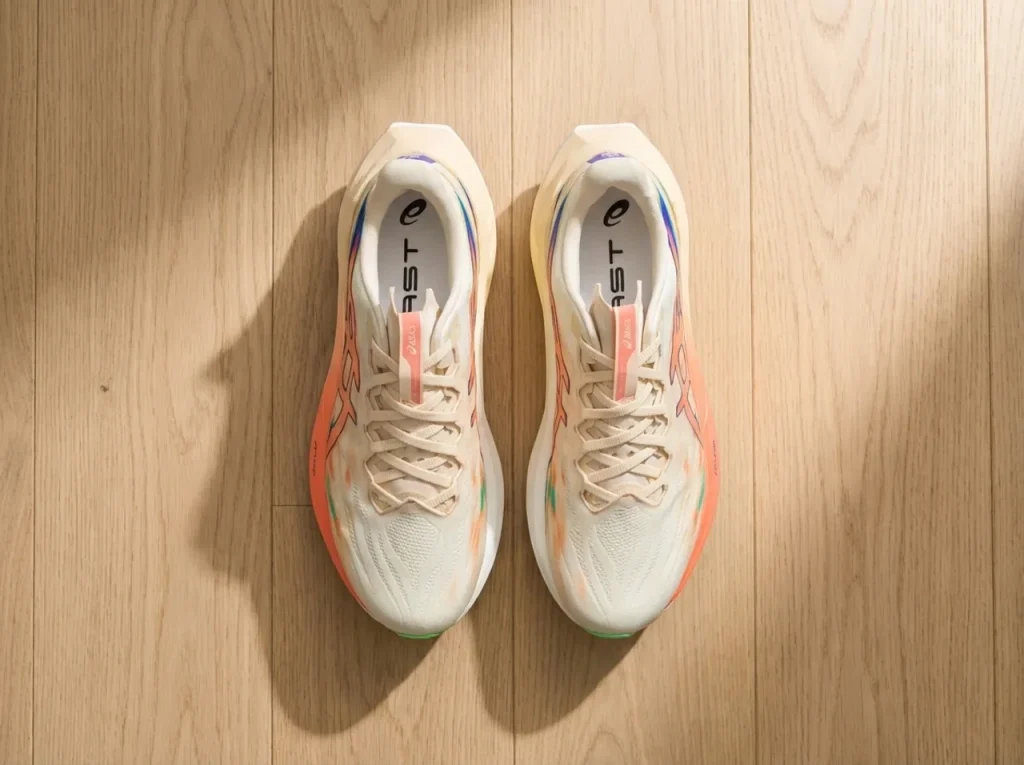
What wins over the previous material is the fit: the foot is better secured throughout the shoe, without localized pressures, with a more structured feeling that does not become constrictive.
The tongue is bellows-like, thin but padded, attached to the sides. He does not travel throughout the race. The lacing system is asymmetrical, similar to what ASICS uses on the Novablast 4, and allows for secure locking without uncomfortable pressure points.
The upper actively contributes to the overall stability of the shoe, and that was not so evident in the previous version.
The sole: grip and durability
The sole maintains the AHARPLUS™ compound, which guarantees durability. The rubber distribution covers the areas of greatest wear - heel and forefoot - and exposes parts of the midsole so as not to add unnecessary weight.
The tapping design favours compression and rebound, and in practice the behaviour is solid. On dry asphalt the grip is impeccable.
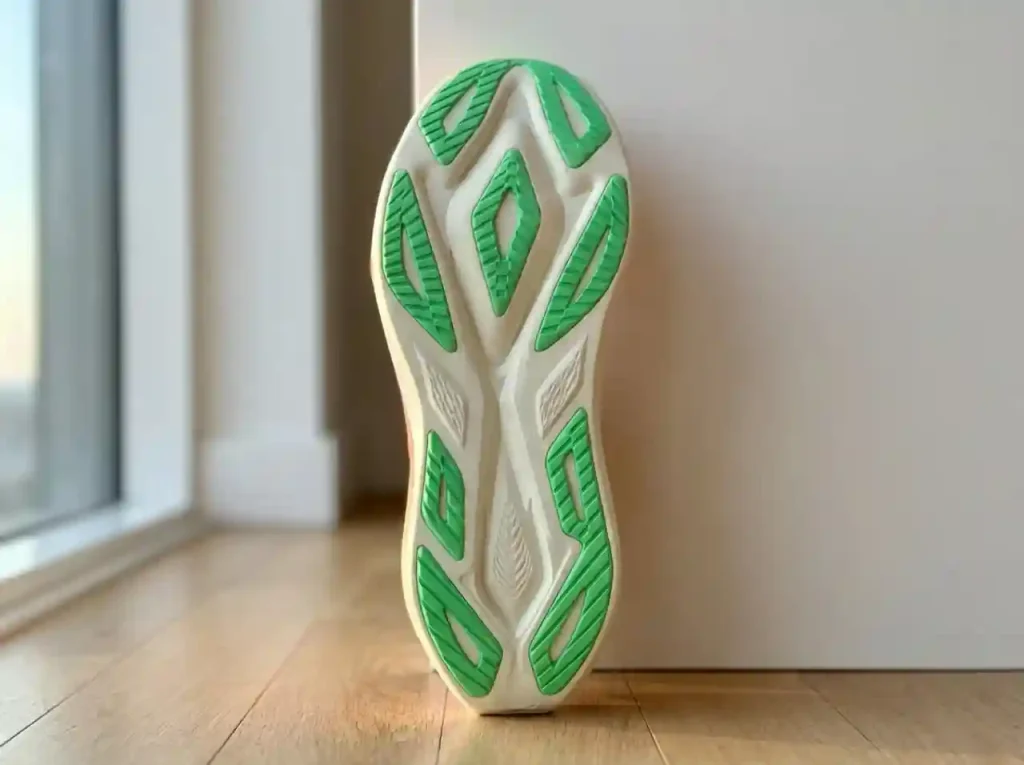
On wet asphalt, it defends much more solidly than previous versions of ASICS, which sometimes slipped in adverse conditions. On compact dirt roads - parks, simple roads - the wide base and good grip make it perfectly valid even if it is not your natural terrain.
After 150 kilometres of testing, wear is practically zero. The durability estimate comfortably exceeds 800 kilometers, probably 900.
Sensations according to rhythm
A maximalist shoe shouldn't be used for everything, but the Superblast 3 holds up quite well in different contexts.
Smooth running and long runs are where this shoe lives most comfortably. The cushioning is abundant, the muscle protection remarkable and the result at the end - even on rides of 25 or 30 kilometers - is less loaded legs than usual.
At speeds above 5:30 min/km, the improved stability compared to the v2 is greatly appreciated.
The average rhythms and quality work between 4:15 and 5:15 min/km is where the shoe looks the most.
The FF Blast Turbo kicks in, the bounce becomes apparent and running becomes entertaining. Fartleks, controlled tempo, marathons at cruising pace: Superblast 3 fits into all this without demanding anything special from the runner.
Series and rhythms below 4:00 min/km are territory where the shoe meets but does not dazzle. You can do it, and there is nothing that limits it absolutely, but without a carbon plate the propulsion does not reach the level of shoes designed specifically for that. For that work there are Metaspeed.
Superblast 3 vs Superblast 2: is it worth changing?
For those who already have the second version and are satisfied, the answer depends on one factor: stability. If v2 gave you exactly what you needed without missing anything, the improvement exists but is not urgent.
| Characteristic | ASICS Superblast 2 | ASICS Superblast 3 | The Verdict |
|---|---|---|---|
| Stability | Improvable, somewhat unstable for some | Excellent. Wider base and safer upper | improvement. |
| Weight | 264 grams (approx.) | 255 grams | Significant IMPROVEMENT |
| Adjustment (Upper) | Comfortable but somewhat loose | More structured, secure and premium | SUBJECTIVE IMPROVEMENT (we like 3 better) |
| Midsole feel | Very reactive and “wild” | Balanced, controlled and reactive | Evolution (more versatile) |
| Versatility | Very high | Even greater thanks to stability | Improvement |
If you noticed instability - especially at a slow pace or being a runner of more than 80 kg - the third version solves that problem at its root. It's not a colour update - there are real changes with real consequences on the race.
As for weight, the slimming of almost 10 grams is noticeable in the hand even if it is not revolutionary in movement. The upper is, in our opinion, a clear improvement over the previous one.
Direct jurisdiction
The category of maxi-trainers without a badge is more crowded than two years ago. The New Balance FuelCell SuperComp Trainer v3 is the most direct competitor: very reactive foam and great cushioning, although the Superblast 3 is somewhat lighter and offers greater stability in our tests.
The Hoka Mach X has a Pebax plate -not carbon- and is firmer and more aggressive in response; the ASICS is more comfortable for continuous daily use.
The Adidas Adizero Boston 12 includes carbon rods and is more geared to fast paces; the Superblast 3 outperforms it in comfort for long shoots at a quiet pace, although the Boston 12 wins when the goal is to run fast.
Who we recommend it for
Superblast 3 makes sense for various profiles. The runner who wants a single high-end shoe that serves to train, make quality and compete over long distances without looking for the personal record. The one who accumulates many weekly kilometers and needs to protect the joints without giving up the sensation. The one who already wears a shoe with a badge for important appointments and looks for the ideal complement for the rest of the work. And runs